
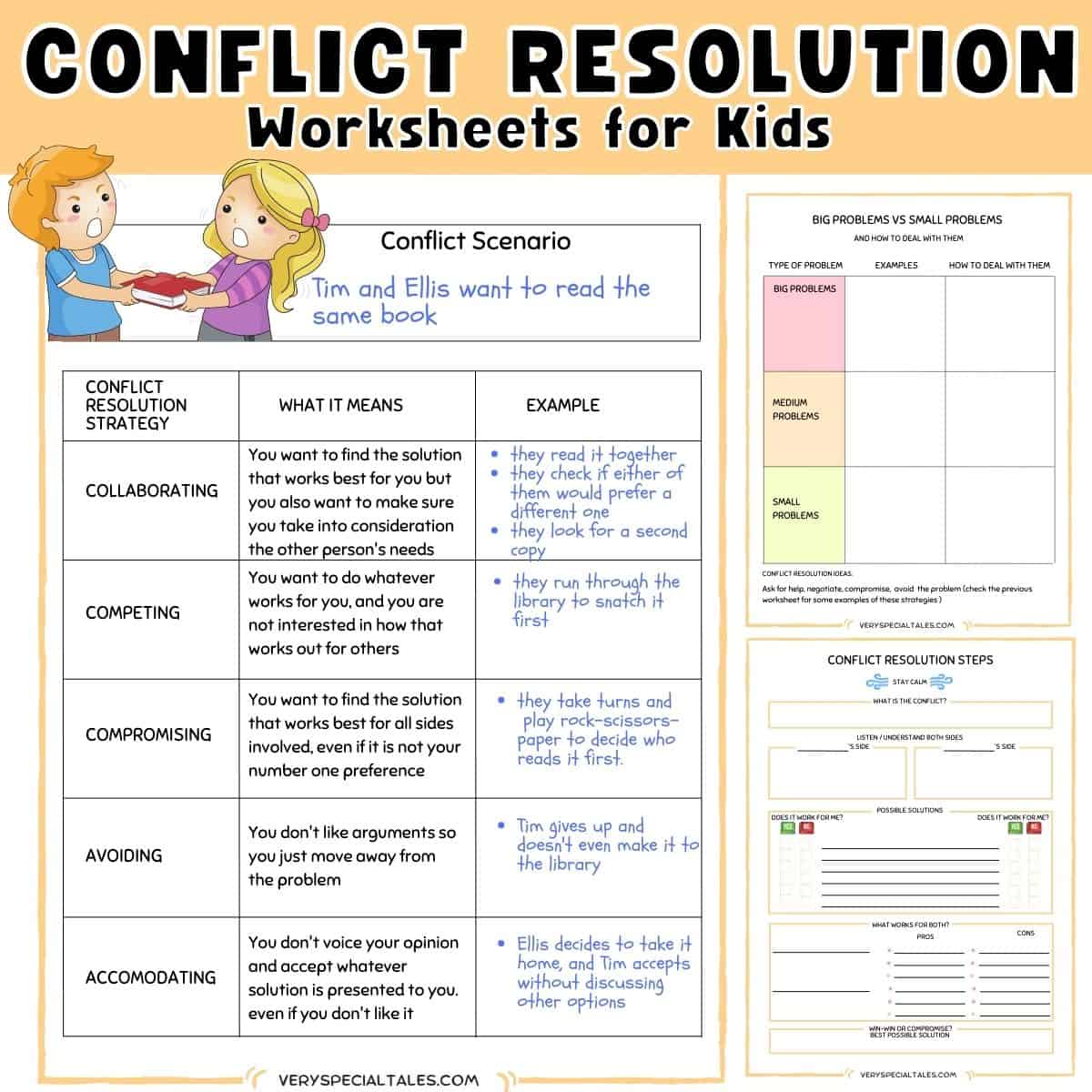
Conflict is a natural part of school life. Students may disagree about classroom rules, group assignments, friendships, games, or different points of view. Although disagreements can sometimes lead to frustration, they also provide valuable opportunities for students to learn communication, empathy, self-control, and problem-solving.
Teaching students how to manage disagreements respectfully can help create a safer and more supportive learning environment. Instead of encouraging students to avoid every disagreement, teachers can show them how to listen carefully, express their feelings appropriately, consider different perspectives, and work toward fair solutions.
Conflict resolution activities for students make these skills easier to understand and practise. Through role-playing, cooperative games, guided discussions, and realistic classroom scenarios, students can learn how to respond to conflict constructively rather than reacting with anger or blaming others.
This article explores practical conflict resolution activities for different age groups, explains how teachers can introduce them into everyday lessons, and provides strategies for helping students develop stronger relationships and peaceful problem-solving habits.
Why Is Conflict Resolution Important for Students?
Conflict resolution is the process of addressing disagreements in a constructive way. It involves identifying the problem, understanding the people involved, communicating respectfully, considering possible solutions, and deciding how to move forward.
When students develop these skills, they can manage everyday disagreements more effectively and contribute to a positive classroom culture.
1. Develops communication skills
Students need to explain their thoughts, feelings, needs, and concerns clearly. They also need to listen without interrupting or making assumptions.
Conflict resolution activities provide opportunities to practise these behaviours in structured, low-pressure situations before students encounter more difficult disagreements.
2. Encourages empathy and understanding
Students may interpret the same situation differently. One student might view a comment as a joke, while another feels embarrassed or excluded.
Activities that explore different perspectives help students recognize that people can experience the same event in different ways. This understanding can reduce misunderstandings and encourage more thoughtful responses.
3. Builds emotional regulation
Strong emotions can make it difficult to think clearly or communicate respectfully. Students benefit from learning how to recognize frustration, pause before reacting, and use appropriate calming strategies.
With practice, students can become more aware of their emotional responses and learn when to take a break before discussing a problem.
4. Strengthens teamwork
Group assignments and cooperative projects sometimes create disagreements about responsibilities, decisions, or the distribution of work.
Conflict resolution skills help students share ideas, negotiate responsibilities, and make decisions without relying on arguments or personal criticism.
5. Supports a positive school environment
When students have practical strategies for managing disagreements, teachers can devote more attention to teaching and learning. Respectful conflict management can also help students feel heard and encourage a stronger sense of belonging.
However, conflict resolution should not be treated as a substitute for school safeguarding procedures. Bullying, harassment, threats, discrimination, or violence require appropriate adult intervention and should not be handled as ordinary disagreements between equally responsible students.
12 Practical Conflict Resolution Activities for Students
The following activities can be adapted for elementary, middle, and high school students. Teachers should adjust the language, scenarios, and level of support according to students’ developmental needs.
1. The Feelings Identification Activity
Best for: Kindergarten through Grade 5
Skills developed: Emotional awareness, empathy, communication, and self-regulation.
Students sometimes react strongly because they cannot identify or explain what they are feeling. This activity helps them connect emotions with situations and practise expressing themselves appropriately.
How to conduct the activity:
- Prepare cards showing emotions such as happiness, disappointment, anger, embarrassment, worry, and frustration.
- Ask students to select a card that represents how someone might feel in a fictional classroom situation.
- Invite students to explain what might cause that feeling.
- Discuss different ways the person could express the emotion respectfully.
- Practise a suitable response as a class.
For example, a student might feel frustrated when a partner changes a group project’s design without asking. The student could learn to say, “I feel frustrated because I wanted us to discuss the changes first.”
Teacher tip: Explain that all feelings are valid, but not every behaviour is acceptable. Students can feel angry without insulting, threatening, or hurting someone.
2. Role-Playing Common Classroom Conflicts
Best for: Grades 2–12
Skills developed: Communication, perspective-taking, negotiation, and problem-solving.
Role-playing allows students to practise handling disagreements without placing them in a real conflict.
How to conduct the activity:
- Prepare short scenarios based on common school situations.
- Divide students into pairs or small groups.
- Assign roles to the participants.
- Ask students to act out the disagreement using respectful communication.
- Invite the class to identify which responses helped and which made the conflict worse.
- Repeat the scenario with a more constructive approach.
Possible scenarios include:
- Two students want to use the same classroom equipment.
- Group members disagree about how to complete an assignment.
- A student feels left out during a game.
- Two classmates have different ideas for a presentation.
- One student believes another has interrupted them repeatedly.
After each role-play, ask students what each person wanted, how the disagreement developed, and what could help both parties move forward.
Important: Use fictional situations or neutral examples. Do not require students to reenact personal conflicts, disclose sensitive experiences, or publicly identify classmates involved in real incidents.
3. The Active Listening Challenge
Best for: Grades 3–12
Skills developed: Listening, patience, empathy, and accurate communication.
Many disagreements become worse when people focus on preparing their next response instead of understanding what the other person is saying.
This activity teaches students to listen carefully before responding.
How to conduct the activity:
- Place students in pairs.
- Give each student a simple topic, such as choosing a class activity or deciding how to organize a group project.
- Ask the first student to explain their view for one minute.
- The second student summarizes the speaker’s main point without criticizing it.
- The first student confirms whether the summary is accurate.
- Switch roles.
Teach students useful phrases such as:
- “What I understand you to mean is…”
- “Can you explain that a little more?”
- “It sounds like you are concerned about…”
- “Did I understand your point correctly?”
Finish by discussing how listening affected the conversation.
The objective is not to force students to agree. It is to help them understand another person’s position before deciding what to do.
4. The “I-Statement” Practice
Best for: Grades 2–12
Skills developed: Assertive communication, emotional awareness, and respectful disagreement.
Students may express frustration through blame, accusations, or insults. An “I-statement” helps them explain how a situation affects them without attacking another person.
Teach students this simple structure:
“I feel ___ when ___ because ___. I would like ___.”
For example:
Instead of saying, “You never let me speak,” a student could say, “I feel frustrated when I am interrupted because I want to share my idea. I would like a chance to finish speaking.”
How to conduct the activity:
- Write a few common blaming statements on the board.
- Ask students to identify the feeling or concern behind each statement.
- Work together to rewrite the statements using respectful language.
- Let students practise the revised statements in pairs.
- Discuss how the wording changes the tone of the conversation.
Remind students that “I-statements” should describe genuine feelings and specific behaviours. They should not be used to disguise insults or manipulate another person.
5. The Conflict Resolution Steps Poster
Best for: Grades 3–8
Skills developed: Sequential thinking, decision-making, self-regulation, and problem-solving.
Students benefit from having a clear process they can remember when a disagreement occurs.
Create a classroom poster with five steps:
- Pause: Calm down before responding.
- Explain: Describe the problem without insults or blame.
- Listen: Give each person an opportunity to speak.
- Solve: Suggest and compare possible solutions.
- Agree: Choose a fair next step and review whether it works.
How to conduct the activity:
Introduce one step at a time and demonstrate it with a fictional disagreement. Then ask students to practise the entire process in pairs using simple scenarios.
Keep the poster visible so students can refer to it during group work and classroom discussions.
For younger learners, use pictures or symbols alongside the words. For older students, add prompts about evidence, responsibility, boundaries, and the consequences of different solutions.
6. The Win-Win Solution Challenge
Best for: Grades 3–10
Skills developed: Negotiation, flexibility, creativity, and collaborative problem-solving.
Students sometimes assume that conflict resolution means one person wins while the other loses. This activity challenges them to identify solutions that address the important needs of everyone involved.
How to conduct the activity:
- Present a fictional disagreement between two students.
- Ask each student to explain what they want and why it matters.
- Have the class brainstorm several possible solutions.
- Discuss which solutions address the main concerns of both people.
- Ask students to select the most practical option and explain their reasoning.
For example, two students want to use the same classroom resource at the same time. Possible solutions might include creating a schedule, sharing the resource, dividing the task into stages, or finding an appropriate alternative.
Explain that a win-win outcome does not mean everyone receives exactly what they initially requested. It means the solution makes a reasonable effort to address legitimate needs while respecting boundaries and fairness.
7. The Perspective-Taking Activity
Best for: Grades 4–12
Skills developed: Empathy, critical thinking, communication, and interpretation.
Students may assume they know why another person behaved a certain way. Perspective-taking encourages them to distinguish what they observed from what they are guessing.
How to conduct the activity:
- Present a fictional situation in which two students interpret an event differently.
- Ask students to describe what each person saw or experienced.
- Separate observable facts from assumptions.
- Invite students to suggest questions that could clarify the misunderstanding.
- Discuss how additional information might change each person’s interpretation.
For example, one student may believe a classmate deliberately ignored them in the hallway. The other student may not have noticed them.
Students should explore possible explanations without assuming that every harmful action is accidental. The aim is to gather information before drawing conclusions.
8. The Cooperative Building Challenge
Best for: Grades 1–8
Skills developed: Collaboration, negotiation, turn-taking, flexibility, and shared decision-making.
Give small groups a limited set of materials, such as paper, blocks, straws, or craft sticks. Ask them to build a structure that meets specific requirements.
Before the activity, establish expectations for sharing materials, hearing ideas, and making group decisions.
How to conduct the activity:
- Explain the building challenge and its requirements.
- Give each student time to suggest an idea.
- Ask the group to agree on a plan before building.
- Observe how students manage different opinions.
- Pause the activity if needed to model respectful disagreement.
- Let students reflect on how they made decisions and handled differences.
Afterward, discuss which behaviours helped the group succeed.
Avoid judging students solely on the quality of the final structure. Focus on how they communicated, included others, managed disagreements, and adapted their plans.
9. The Classroom Problem-Solving Circle
Best for: Grades 4–12
Skills developed: Discussion, accountability, active listening, and collaborative decision-making.
A structured discussion circle can help students address general classroom concerns before small problems grow into larger disagreements.
Choose a low-risk, non-personal topic, such as how to share materials fairly or how to make group discussions more inclusive.
How to conduct the activity:
- Explain the purpose and ground rules.
- Give students time to think before speaking.
- Invite students to describe the issue without naming or blaming individuals.
- Record the different needs and concerns raised.
- Brainstorm possible changes.
- Agree on one or two actions to try.
- Review the results at a later meeting.
Students should be allowed to pass rather than speak, and the teacher should prevent the discussion from becoming a public accusation session.
Do not use a group circle to investigate alleged abuse, bullying, threats, or serious misconduct. Those situations require appropriate individual support and established school procedures.
10. The Apology and Repair Activity
Best for: Grades 2–12
Skills developed: Accountability, empathy, reflection, and relationship repair.
An apology can be meaningful when it recognizes harm and is followed by appropriate action. Students should learn that saying “sorry” does not automatically resolve every problem.
Introduce a simple repair framework:
- Identify what happened.
- Recognize how the action affected another person.
- Take responsibility for one’s own behaviour.
- Consider what could help repair the harm.
- Make a realistic plan to avoid repeating the behaviour.
How to conduct the activity:
Use fictional scenarios to help students practise meaningful apologies and repair actions.
For example, if a student damages a classmate’s project, an appropriate response might include acknowledging the damage, apologizing without excuses, and helping repair or replace the work where possible.
Do not force students to apologize immediately or require the harmed student to accept an apology. A genuine repair process must respect safety, boundaries, and the needs of the person affected.
11. The Fairness and Decision-Making Game
Best for: Grades 4–12
Skills developed: Ethical reasoning, negotiation, critical thinking, and fairness.
Students may disagree because they have different ideas about what is fair. This activity encourages them to examine the reasons behind their decisions.
How to conduct the activity:
- Present a fictional classroom situation involving competing needs.
- Ask students to identify the people affected.
- Invite them to suggest possible decisions.
- Discuss how each decision affects the different people involved.
- Ask students to explain which option seems fairest and why.
- Consider whether a different solution might address the concerns more effectively.
Possible scenarios include distributing limited classroom supplies, assigning group responsibilities, or deciding how to share time during a class presentation.
Encourage students to distinguish equal treatment from fair treatment. Sometimes students need different forms of support to participate meaningfully.
12. The Reflection Journal
Best for: Grades 5–12
Skills developed: Self-awareness, emotional regulation, reflection, and personal responsibility.
A reflection journal helps students consider how they respond to disagreement and which strategies they want to improve.
Use fictional scenarios or general reflections rather than requiring students to record private details about classmates.
Possible prompts include:
- What can make a disagreement more difficult to manage?
- Which communication strategy helps you listen more carefully?
- How can you express frustration respectfully?
- What is the difference between explaining your point and blaming someone?
- When is it important to ask an adult for help?
- What could you do differently in a future disagreement?
Students should not be required to disclose sensitive personal experiences. If journals are collected, explain how they will be used and who may read them.
Conflict Resolution Activities by Grade Level
Students’ conflict resolution needs change as they develop emotionally, socially, and academically. Teachers should select activities that match students’ developmental levels and provide appropriate guidance.
| Grade level | Recommended activities | Main learning goals |
|---|---|---|
| Kindergarten–Grade 2 | Feelings cards, turn-taking games, simple stories | Naming emotions, sharing, and asking for help |
| Grades 3–5 | Role-playing, I-statements, listening challenges | Respectful communication and simple negotiation |
| Grades 6–8 | Perspective-taking, win-win challenges, cooperative projects | Empathy, accountability, and collaborative problem-solving |
| Grades 9–12 | Ethical dilemmas, structured discussions, reflection journals | Complex decision-making, boundaries, and responsible communication |
These categories are flexible. Teachers should adapt the activities to students’ language abilities, individual needs, classroom context, and previous experiences.
How Teachers Can Introduce Conflict Resolution Activities Successfully
Effective conflict resolution instruction requires more than giving students an activity and expecting them to work everything out. Teachers need to model appropriate behaviours, establish clear boundaries, and provide opportunities for guided practice.
Establish clear classroom expectations
Before activities begin, explain that students should listen respectfully, avoid insults, allow others to speak, and disagree with ideas rather than attack people.
Make it clear that threats, harassment, discriminatory comments, physical aggression, and intimidation are unacceptable.
Model the language of respectful disagreement
Students need examples of what constructive communication sounds like. Teachers can demonstrate how to disagree without becoming hostile.
For example:
“I understand your idea. I see the problem differently because…”
“Could we compare both options before deciding?”
“I need a moment to calm down before we continue.”
“What would be a fair way to solve this problem?”
Modelling these phrases makes the expectations concrete and easier for students to practise.
Start with fictional, low-pressure scenarios
Begin with simple disagreements that do not involve sensitive personal experiences. As students become more confident, teachers can introduce more complex situations.
Students should never be pressured to reenact a real conflict or disclose private information to the class.
Allow time for reflection
After each activity, discuss what students noticed, which strategies helped, and what could be improved.
Reflection helps students connect the practice activity with everyday interactions.
Provide additional support when necessary
Some students may need extra help with emotional regulation, communication, social understanding, or language. Teachers can offer sentence starters, visual prompts, smaller groups, extra preparation time, or individual support.
Where appropriate, school counsellors and other trained professionals can help students develop more individualized strategies.
How to Measure Students’ Conflict Resolution Skills
Teachers can assess conflict resolution by observing how students communicate, respond to different perspectives, and approach disagreements. Assessment should focus on specific behaviours rather than labelling students as good or bad at managing conflict.
Use a simple observation checklist
During role-play or cooperative activities, teachers can look for whether students:
- Describe the problem without insulting others.
- Identify and express their feelings appropriately.
- Listen without repeatedly interrupting.
- Ask questions to clarify misunderstandings.
- Suggest more than one possible solution.
- Consider fairness and the needs of others.
- Recognize when adult support is needed.
- Reflect on what worked and what could improve.
Teachers can use a simple scale such as “Not yet,” “Developing,” and “Consistently demonstrated.”
Ask students to reflect on their learning
After an activity, ask students to identify one strategy they used and one they would like to improve.
For example, a student might explain that repeating another person’s main point helped prevent a misunderstanding. Another student might identify taking a short pause as a useful way to manage frustration.
Look for progress over time
Students may need repeated practice before they use a strategy independently during a real disagreement. Teachers should look for gradual improvement across classroom activities, group work, and appropriate everyday interactions.
Avoid treating a single incident as proof that a student has or has not mastered conflict resolution.
Common Mistakes to Avoid
Forcing students to agree
Conflict resolution does not mean that every disagreement must end with identical opinions. Students can reach a respectful outcome while continuing to disagree about an issue.
Treating every conflict as mutual responsibility
Some disagreements involve unequal power, repeated bullying, harassment, or deliberate harm. Teachers should not assume that both students are equally responsible or require a harmed student to negotiate with the person who hurt them.
Using public embarrassment as a teaching strategy
Calling out students in front of their classmates can increase shame and defensiveness. When a real incident occurs, address it privately when appropriate and follow school procedures.
Expecting an immediate apology
A forced apology may not demonstrate understanding or genuine accountability. Students need opportunities to understand the impact of their actions and participate in appropriate repair.
Ignoring the emotional side of conflict
Students may not be ready to discuss a problem while they are highly upset. Help them become calm enough to communicate safely before beginning a problem-solving conversation.
Teaching strategies without practising them
Students may understand a concept but struggle to use it under pressure. Regular role-play, modelling, reflection, and reinforcement help make the skills more familiar.
Frequently Asked Questions
1. What are the best conflict resolution activities for students?
Effective activities include role-playing, active listening exercises, I-statement practice, perspective-taking scenarios, cooperative challenges, problem-solving circles, and reflection journals. The most suitable activity depends on students’ ages, learning needs, and the type of skill being developed.
2. How can teachers teach conflict resolution to young students?
Teachers can start with emotion cards, turn-taking games, simple stories, and guided role-play. Short instructions, visual supports, modelling, and repeated practice help young learners understand how to express feelings and solve small disagreements respectfully.
3. How does role-playing help students resolve conflicts?
Role-playing gives students a safe way to practise communication, listening, negotiation, and problem-solving. It allows them to explore different responses to a disagreement without requiring them to recreate a real personal conflict.
4. What is an I-statement in conflict resolution?
An I-statement explains a person’s feelings and concerns without directly attacking another person. For example, “I feel frustrated when I am interrupted because I want to finish explaining my idea.” It can help students communicate more clearly and reduce blaming language.
5. How can students learn to manage anger during a disagreement?
Students can learn to recognize emotional signals, pause before responding, breathe slowly if helpful, use respectful words, and ask for a break when needed. Teachers should also explain when a student needs adult support rather than attempting to manage a situation alone.
6. How can schools prevent conflicts from escalating?
Schools can establish clear behaviour expectations, teach communication skills, supervise shared spaces appropriately, respond consistently to harmful behaviour, and make it easy for students to seek help. Repeated bullying, threats, harassment, and violence require appropriate intervention rather than relying only on peer negotiation.
7. Should students resolve every disagreement on their own?
No. Students can practise handling minor disagreements when it is safe and appropriate, but they should seek adult help when a situation involves threats, intimidation, bullying, harassment, physical aggression, a significant power imbalance, or a concern they cannot manage safely.
8. How often should teachers use conflict resolution activities?
Teachers can include short practice activities regularly and use longer sessions when appropriate. Repeated opportunities to practise communication, emotional regulation, and collaborative problem-solving help students become more familiar with these strategies.
Conclusion
Teaching students how to manage disagreements is an important part of building a respectful and supportive school environment. Through practical conflict resolution activities for students, teachers can help learners develop active listening, emotional awareness, empathy, negotiation, and responsible decision-making.
Activities such as role-playing, I-statement practice, cooperative challenges, perspective-taking, and reflection journals give students structured opportunities to practise these skills. The most effective activities are age-appropriate, clearly explained, and followed by reflection that connects the exercise with everyday situations.
Teachers should also recognize the limits of peer conflict resolution. Serious or repeated harmful behaviour requires appropriate adult intervention, safeguarding measures, and support for the students affected.
With consistent instruction, clear boundaries, and regular practice, students can learn to express their needs respectfully, consider different perspectives, and work toward constructive solutions when disagreements arise.
Additional Teaching Ideas
Teachers can strengthen conflict resolution instruction by integrating it with classroom discussions, cooperative learning, social-emotional learning, and group projects. A short weekly activity can reinforce one skill at a time, while classroom expectations provide students with a consistent framework for applying what they learn.
The long-term goal is not to eliminate every disagreement. It is to help students respond to conflict with greater understanding, respect, responsibility, and confidence.
