
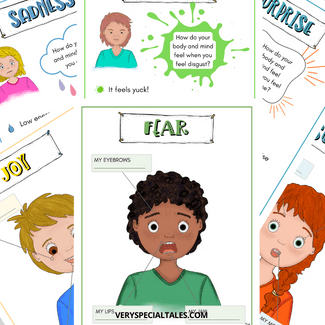
Emotional intelligence is an important life skill that helps students understand their feelings, manage their reactions, recognize other people’s emotions, and build healthy relationships. In school, these abilities can influence how students respond to challenges, work with classmates, handle disagreements, and recover from setbacks.
Teachers can help students strengthen these skills through consistent modelling, supportive classroom routines, and meaningful opportunities to practise emotional awareness. Emotional intelligence activities for students make these lessons practical by helping learners identify feelings, communicate respectfully, understand different perspectives, and make thoughtful decisions.
Developing emotional intelligence does not mean expecting students to remain calm all the time or hide difficult emotions. Instead, students learn to recognize their feelings, express them appropriately, and choose responses that support their well-being and relationships.
This guide explains why emotional intelligence matters in education and presents practical classroom activities, teaching strategies, and assessment ideas that educators can use to help students develop these skills.
What Is Emotional Intelligence in Students?
Emotional intelligence refers broadly to the ability to recognize, understand, and manage emotions while responding thoughtfully to the emotions of others. In educational settings, it overlaps with social and emotional learning, which commonly includes self-awareness, self-management, social awareness, relationship skills, and responsible decision-making.
Students use emotional intelligence when they recognize that they are becoming frustrated during a difficult assignment, ask for help instead of giving up, listen to a classmate’s perspective, or resolve a disagreement without insulting someone.
These skills develop over time. Students need different levels of support depending on their age, temperament, experiences, language abilities, and individual needs.
1. Self-awareness
Self-awareness helps students identify their emotions, recognize personal strengths and challenges, and understand how feelings can influence behaviour.
For example, a student who notices nervousness before a presentation can identify the feeling and choose a helpful preparation strategy.
2. Self-management
Self-management involves responding to emotions in appropriate ways, managing impulses, setting goals, and adapting when circumstances change.
A student who feels frustrated by a difficult mathematics problem might pause, reread the question, and ask for guidance instead of throwing away the work.
3. Social awareness
Social awareness helps students consider other people’s perspectives and recognize that classmates may have different feelings, experiences, and needs.
For example, a student may notice that a classmate is unusually quiet and choose to ask whether they would like help rather than assuming they are being unfriendly.
4. Relationship skills
Relationship skills include listening, communicating clearly, cooperating, resolving disagreements, and maintaining respectful boundaries.
Students practise these skills during group assignments, classroom discussions, peer feedback, and cooperative games.
5. Responsible decision-making
Responsible decision-making involves considering possible consequences, safety, fairness, and the needs of others before acting.
A student might decide to seek a teacher’s help when a disagreement becomes threatening instead of attempting to resolve an unsafe situation alone.
Why Is Emotional Intelligence Important in Education?
Emotional intelligence can support students’ social development and help them participate more effectively in learning activities. It should be taught alongside academic skills rather than treated as a replacement for subject knowledge or effective classroom instruction.
Helps students manage challenging emotions
Students encounter disappointment, uncertainty, frustration, excitement, and stress throughout the school day. Learning to identify and respond to these feelings can help them approach challenges more thoughtfully.
Teachers can support this process by giving students language for their emotions and demonstrating practical ways to pause, reflect, and ask for help.
Supports positive relationships
Students who practise listening and perspective-taking may become better equipped to understand classmates and communicate their own needs. These skills can contribute to a more respectful classroom environment.
However, emotional intelligence does not mean that students must tolerate mistreatment. They should also learn to establish boundaries and seek adult support when necessary.
Encourages persistence and learning
When students recognize frustration as a feeling rather than proof that they cannot succeed, they may be more willing to try another strategy. Teachers can reinforce this idea by praising effort, thoughtful decision-making, and the use of helpful learning strategies.
Emotional skills alone do not solve every academic difficulty. Students still need appropriate instruction, clear explanations, sufficient practice, and support when learning barriers arise.
Improves collaboration
Group activities require students to share responsibilities, listen to different opinions, and handle setbacks. Emotional awareness can help students recognize when a group needs to slow down, clarify expectations, or distribute tasks more fairly.
Contributes to a supportive school climate
When teachers consistently model respect, empathy, fairness, and constructive communication, students have opportunities to see these behaviours in practice. A supportive school climate also requires clear expectations, appropriate safeguarding, and consistent responses to bullying or harmful behaviour.
12 Practical Emotional Intelligence Activities for Students
The following activities can be adapted for different ages and learning environments. Teachers should make participation age-appropriate, avoid forcing personal disclosures, and provide alternative ways to participate when students feel uncomfortable speaking in front of others.
1. The Emotion Identification Check-In
Best for: Kindergarten through Grade 8
Skills developed: Self-awareness, emotional vocabulary, and communication.
Students cannot always explain what they are feeling. A short check-in can help them practise identifying emotions without requiring them to share private details.
How to conduct the activity:
- Display a set of emotion words or pictures, such as happy, disappointed, worried, excited, frustrated, calm, and confused.
- Invite students to select a word that describes how they feel at that moment.
- Ask students to consider what might be contributing to the feeling.
- Let them choose whether to share their response with a partner, write it privately, or simply reflect silently.
- Discuss appropriate ways to respond to different emotions.
For example, a student who feels frustrated before a test might decide to review one topic, ask a question, or take a brief calming pause.
Teacher tip: Avoid labelling emotions as good or bad. Feelings provide information, but students remain responsible for choosing safe and respectful behaviours.
2. The Feelings Vocabulary Journal
Best for: Grades 3–12
Skills developed: Emotional awareness, reflection, vocabulary, and self-expression.
Students sometimes use broad words such as “fine,” “bad,” or “angry” because they do not yet have a detailed emotional vocabulary.
A feelings journal helps them identify more precise descriptions.
How to conduct the activity:
- Give students a notebook or reflection sheet.
- Ask them to select an emotion word from a teacher-provided list.
- Invite them to write a fictional example or a general situation in which someone might feel that emotion.
- Ask them to describe how the feeling could influence thoughts or behaviour.
- Encourage them to identify a healthy response to the situation.
For instance, students can compare feeling disappointed after losing a game with feeling embarrassed after making a mistake in front of classmates.
Students should not be required to record sensitive personal experiences. They may use fictional examples if they prefer.
3. The Empathy and Perspective-Taking Exercise
Best for: Grades 3–12
Skills developed: Empathy, social awareness, critical thinking, and communication.
This activity helps students consider how different people might interpret the same event.
How to conduct the activity:
- Present a fictional classroom scenario.
- Ask students to describe how each person might feel.
- Identify what each person knows and what remains uncertain.
- Discuss questions that could help clarify the situation.
- Invite students to suggest respectful responses.
For example, one student may believe a classmate deliberately excluded them from a group, while the other student may have misunderstood the teacher’s instructions.
Ask students to separate observable facts from assumptions. Emphasize that considering another perspective does not mean excusing harmful behaviour or ignoring evidence.
4. The Calm-Down Strategy Menu
Best for: Kindergarten through Grade 8
Skills developed: Self-management, emotional regulation, and decision-making.
Students benefit from learning several safe ways to respond when they feel overwhelmed. No single strategy works for everyone, so a menu of options gives students opportunities to discover what helps them.
Possible strategies include:
- Taking a short, approved break.
- Breathing slowly and comfortably.
- Counting quietly before responding.
- Asking an adult for help.
- Moving to an agreed quiet area.
- Breaking a difficult task into smaller steps.
- Using positive and realistic self-talk.
- Drawing or writing a brief reflection.
How to conduct the activity:
- Introduce two or three strategies at a time.
- Demonstrate each strategy without suggesting that it eliminates every difficult feeling.
- Let students practise during a calm classroom activity.
- Ask them to identify which strategies they find helpful.
- Create a classroom display showing appropriate options.
Teachers should explain that calming strategies are not punishments. Students should not be denied necessary support or forced to remain in a situation that feels unsafe.
5. The Emotion and Action Sorting Game
Best for: Kindergarten through Grade 5
Skills developed: Emotional literacy, impulse control, and responsible decision-making.
Students sometimes confuse feeling an emotion with acting on it. This activity helps them distinguish between the two.
How to conduct the activity:
- Prepare cards describing emotions and possible behaviours.
- Ask students to match each emotion with several possible responses.
- Discuss which responses are safe, respectful, or helpful.
- Invite students to suggest additional responses.
For example, a student who feels angry might choose to explain the problem, ask for a break, or seek adult help. Shouting at a classmate or damaging property would not be appropriate responses.
Explain that one emotion can lead to many different actions, and students can learn to choose responses that protect themselves and others.
6. The Active Listening Challenge
Best for: Grades 3–12
Skills developed: Relationship skills, patience, empathy, and communication.
Active listening helps students understand what another person is saying before responding.
How to conduct the activity:
- Pair students and provide a neutral topic, such as choosing a class project theme.
- Ask one student to explain their preference.
- The listening student summarizes the main point without interrupting.
- The speaker confirms whether the summary is accurate.
- Switch roles.
- Discuss how listening affected the conversation.
Students can practise useful phrases such as:
- “What I understand you to mean is…”
- “Can you explain that further?”
- “I see why that matters to you.”
- “Did I understand your idea correctly?”
Remind students that listening does not require agreeing with everything they hear. It means making a genuine effort to understand another person’s message.
7. The Role-Play: Responding to Conflict
Best for: Grades 3–12
Skills developed: Emotional regulation, empathy, negotiation, and respectful communication.
Role-play gives students a chance to practise handling disagreements in a structured environment.
Possible scenarios include:
- Two students disagree about how to divide group work.
- A student feels frustrated because someone repeatedly interrupts.
- A classmate makes a comment that is misunderstood.
- Two students want to use the same classroom equipment.
How to conduct the activity:
- Select a fictional, age-appropriate scenario.
- Assign roles and explain the expected boundaries.
- Ask students to demonstrate an unhelpful response.
- Discuss how the response affects the people involved.
- Repeat the scenario using respectful communication and problem-solving.
- Invite students to reflect on what changed.
Do not require students to reenact a real bullying incident or act out traumatic experiences. Serious harm and unequal power relationships require appropriate adult intervention rather than a role-play designed to make students negotiate together.
8. The Strengths and Personal Qualities Activity
Best for: Grades 2–10
Skills developed: Self-awareness, confidence, positive peer interaction, and appreciation of others.
Understanding personal strengths can help students recognize what they contribute to a classroom community. It can also help them appreciate qualities that differ from their own.
How to conduct the activity:
- Provide a list of qualities, such as persistence, creativity, patience, fairness, curiosity, organization, and kindness.
- Ask students to select two or three qualities they are developing.
- Invite them to identify a fictional or general example of how a person might demonstrate each quality.
- In pairs, students can share one strength they appreciate in teamwork, if they feel comfortable.
- Finish with a discussion about how different strengths can support a group.
Avoid turning the activity into a popularity contest. Students should not be required to rank classmates or publicly disclose personal insecurities.
9. The Decision-Making Scenario
Best for: Grades 4–12
Skills developed: Responsible decision-making, emotional awareness, critical thinking, and problem-solving.
Emotions can influence decisions, especially when students feel pressured or upset. This activity helps them pause and consider possible consequences before acting.
How to conduct the activity:
- Present a fictional dilemma.
- Ask students to identify the problem and the emotions that might arise.
- List several possible responses.
- Discuss the likely consequences of each option.
- Consider fairness, safety, responsibilities, and other people’s needs.
- Select a reasonable response and explain why it is appropriate.
For example, a student may discover that a friend has shared an unkind message about another classmate. Students can consider how to respond without spreading the message further and when adult support may be necessary.
10. The Gratitude and Positive Observation Activity
Best for: Kindergarten through Grade 8
Skills developed: Reflection, appreciation, social awareness, and positive communication.
This activity invites students to notice helpful actions and positive contributions within their learning environment.
How to conduct the activity:
- Ask students to think of a helpful action they observed during the week.
- Invite them to describe the action rather than making broad judgments about a person’s character.
- Let students write a short note or share an observation.
- Discuss how small actions can contribute to a supportive classroom.
For example, a student might notice that a classmate explained a difficult instruction or helped organize shared materials.
Keep participation voluntary and ensure that students who are less socially connected are not overlooked. Gratitude activities should not be used to dismiss genuine concerns or pressure students to feel positive about difficult situations.
11. The Cooperative Problem-Solving Challenge
Best for: Grades 3–12
Skills developed: Collaboration, emotional regulation, communication, and flexible thinking.
Students can practise emotional intelligence while working toward a shared goal.
Give groups a challenge such as building a paper bridge, planning a class display, or organizing a fictional event within a limited budget.
How to conduct the activity:
- Explain the task and establish respectful discussion rules.
- Ask each student to contribute an idea before the group chooses a plan.
- Assign roles if useful.
- Observe how students handle disagreements and setbacks.
- Give groups an opportunity to revise their approach.
- Ask each student to reflect on how the group communicated and made decisions.
Assess the quality of the process as well as the final result. A group that identifies a problem, listens to different perspectives, and improves its plan has practised valuable skills even if the final product is imperfect.
12. The Weekly Reflection Check-In
Best for: Grades 4–12
Skills developed: Self-awareness, self-management, goal-setting, and reflection.
A short weekly reflection helps students consider which strategies they are learning and where they may need more support.
Use prompts such as:
- What is one skill I practised this week?
- What helps me stay focused when I feel frustrated?
- How can I show that I am listening to someone?
- What can I do when I disagree with a classmate?
- When should I ask an adult for help?
- What is one small goal I want to work on next week?
Students can complete the reflection privately, submit it to the teacher, or discuss selected prompts in pairs.
Do not grade students on which emotions they report or expect them to describe personal experiences. The goal is to support reflection, not to judge feelings.
Emotional Intelligence Activities by Grade Level
Teachers should adapt activities to students’ developmental needs and prior experience.
| Grade level | Suggested activities | Main learning goals |
|---|---|---|
| Kindergarten–Grade 2 | Emotion cards, action sorting, simple stories, calm-down practice | Naming feelings, identifying safe responses, and asking for help |
| Grades 3–5 | Listening games, empathy exercises, cooperative challenges, role-play | Understanding perspectives, communicating clearly, and managing frustration |
| Grades 6–8 | Conflict scenarios, decision-making exercises, reflection journals, teamwork tasks | Self-regulation, accountability, empathy, and responsible choices |
| Grades 9–12 | Complex dilemmas, group projects, structured reflection, peer communication exercises | Ethical reasoning, boundaries, relationship skills, and independent decision-making |
These are flexible suggestions rather than strict age limits. Teachers should consider individual learning needs, language proficiency, accessibility, and the social context of the class.
How Teachers Can Integrate Emotional Intelligence Into Everyday Lessons
Emotional intelligence does not need to be taught only during a separate lesson. Teachers can reinforce it through everyday classroom interactions and subject-based activities.
Model emotional awareness
Teachers can demonstrate how to recognize and communicate emotions appropriately. For example, a teacher might say, “This task is challenging, so I am going to pause, review the instructions, and work through one step at a time.”
Modelling should be brief and age-appropriate. Teachers do not need to share private personal information to demonstrate healthy emotional responses.
Use respectful classroom language
Consistent language helps students understand expectations. Teachers can encourage phrases such as “I see it differently,” “Could you explain your reasoning?” and “I need help with this part.”
Correct disrespectful behaviour without humiliating the student. Explain what needs to change and provide an example of a more appropriate response.
Build reflection into academic tasks
After a challenging assignment, ask students to consider how they responded when they encountered difficulty. They might identify a strategy that helped them persist, a question they needed to ask, or a way they could prepare differently next time.
Keep the focus on specific behaviours and strategies rather than broad judgments about a student’s personality.
Encourage constructive group work
Group projects give students opportunities to practise listening, dividing responsibilities, and resolving disagreements. Establish clear roles and expectations before students begin.
If a conflict arises, help students identify the problem and choose a safe, respectful next step. Do not require students to negotiate when there is intimidation, harassment, or a significant imbalance of power.
Create predictable classroom routines
Clear routines can help students understand what to expect and how to seek support. Teachers can establish consistent procedures for asking questions, requesting a break, responding to mistakes, and getting help with disagreements.
Predictability can be especially useful for students who find transitions or uncertainty challenging.
How to Support Students Who Struggle With Emotional Regulation
Some students may find it difficult to recognize emotions, communicate needs, manage impulses, or recover from frustration. These difficulties can have many causes, and teachers should avoid assuming that a student is deliberately misbehaving.
Identify the specific difficulty
Observe when the challenge occurs. Does the student struggle during transitions, group work, difficult assignments, unexpected changes, or disagreements?
Specific observations can help teachers identify patterns and select appropriate support.
Teach one skill at a time
Rather than introducing many strategies at once, focus on a manageable skill, such as naming a feeling, asking for help, or pausing before responding.
Model the skill, practise it in a low-pressure situation, and reinforce appropriate attempts.
Provide visual and verbal prompts
Some students benefit from emotion charts, step-by-step reminders, sentence starters, or visual schedules. These tools can reduce the amount of language a student must process when they feel overwhelmed.
Recognize individual differences
Students vary in how they express emotions and interact with others. Quiet behaviour does not necessarily mean that a student lacks emotional intelligence, and visible distress does not automatically mean that a student lacks self-control.
Offer multiple ways to participate and avoid expecting every student to demonstrate emotions in the same manner.
Involve appropriate support when needed
If emotional or behavioural difficulties persist, significantly affect learning, or raise concerns about safety, consult the appropriate school professionals and follow school procedures. Families may also need to be involved, depending on the situation and applicable policies.
Classroom activities are educational tools, not a substitute for individualized professional support when it is needed.
How to Assess Students’ Emotional Intelligence Skills
Teachers should assess the skills students practise rather than attempt to label or rank their emotional lives.
A student may understand a strategy but struggle to use it during a stressful moment. Assessment should therefore focus on progress, opportunities to practise, and the support required.
Use an observation checklist
During classroom activities, teachers can observe whether students:
- Identify emotions using appropriate vocabulary.
- Describe a problem without immediately blaming others.
- Listen to classmates without repeated interruptions.
- Consider more than one perspective.
- Use a suitable calming or help-seeking strategy.
- Communicate needs respectfully.
- Suggest safe and fair solutions.
- Reflect on what they could improve.
A simple scale such as “Beginning,” “Developing,” and “Consistently demonstrated” can help teachers record progress over time.
Use student self-reflection
Invite students to identify one skill they practised and one strategy they want to use again. Students can complete these reflections privately to encourage honest responses.
Provide specific feedback
Instead of saying, “You are emotionally intelligent,” describe the behaviour: “You listened to both ideas before suggesting a compromise.”
Specific feedback helps students understand what they did well and how they can repeat that behaviour.
Avoid grading feelings
Students should not receive lower marks because they report feeling angry, worried, or sad. Assessment should focus on learning and applying appropriate strategies, not on whether students experience only positive emotions.
Common Mistakes to Avoid When Teaching Emotional Intelligence
Expecting students to stay calm all the time
Emotional intelligence does not mean suppressing feelings. Students should learn to recognize emotions and respond safely, even when the emotions remain strong.
Treating every emotional response as misbehaviour
A student’s behaviour may indicate confusion, stress, unmet needs, or difficulty with a task. Teachers should respond to unsafe behaviour appropriately while also considering what support the student needs.
Forcing students to share personal experiences
Activities should not require students to disclose family problems, friendship difficulties, or private emotions. Fictional scenarios and private reflections offer alternatives.
Using empathy to excuse harmful behaviour
Understanding why someone acted a certain way does not make harmful behaviour acceptable. Students can consider another person’s perspective while maintaining boundaries and seeking help.
Assuming every student needs the same strategy
Breathing exercises, journaling, movement breaks, and verbal reflection may work differently for different students. Offer appropriate choices and observe what helps.
Treating emotional intelligence as a quick fix
These skills develop over time. Students need repeated practice, consistent adult modelling, a supportive school environment, and appropriate intervention when more help is required.
Frequently Asked Questions
1. What are the best emotional intelligence activities for students?
Useful activities include emotion identification check-ins, feelings journals, empathy exercises, active listening games, role-playing, cooperative challenges, and weekly reflection. The most appropriate activity depends on students’ ages, learning goals, and individual needs.
2. At what age should students begin learning emotional intelligence?
Students can begin learning basic emotional vocabulary and self-awareness during early childhood. As they grow, they can practise more complex skills such as perspective-taking, negotiation, ethical decision-making, and relationship management.
3. How can teachers teach empathy in the classroom?
Teachers can use fictional stories, perspective-taking exercises, guided discussions, and cooperative projects. Ask students to consider what different people might know, feel, or need while reminding them that empathy does not require tolerating harmful behaviour.
4. How can students learn to manage strong emotions?
Students can practise identifying emotional signals, using appropriate calming strategies, expressing needs respectfully, breaking difficult tasks into smaller steps, and seeking help when necessary. Different students may find different strategies useful.
5. How does emotional intelligence support academic learning?
Emotional intelligence can help students recognize frustration, communicate questions, cooperate with classmates, and respond thoughtfully to challenges. However, academic progress also depends on effective teaching, sufficient practice, suitable learning materials, and access to support.
6. How can teachers assess emotional intelligence?
Teachers can observe specific behaviours during activities, use student reflections, and provide feedback on communication, listening, perspective-taking, and problem-solving. Students should not be graded on whether they report particular emotions or share private experiences.
7. Can emotional intelligence activities prevent bullying?
These activities may help students practise empathy, respectful communication, and help-seeking. However, they cannot replace effective school policies, adult supervision, reporting procedures, and appropriate intervention when bullying occurs.
8. How often should teachers use emotional intelligence activities?
Teachers can incorporate brief activities into regular classroom routines and schedule longer lessons when appropriate. Consistent practice, modelling, and reflection are generally more useful than relying on a single activity.
Conclusion
Emotional intelligence helps students understand their feelings, manage their responses, recognize other people’s perspectives, and build healthier relationships. Teachers can support these skills through practical emotional intelligence activities for students, including emotion check-ins, empathy exercises, active listening challenges, role-play, cooperative projects, and reflection journals.
The most effective activities are age-appropriate, inclusive, and connected to everyday classroom experiences. Students need opportunities to practise skills without being pressured to reveal personal information or hide difficult emotions.
Teachers also play an important role by modelling respectful communication, creating predictable routines, setting clear boundaries, and recognizing when a student needs additional support. Emotional intelligence develops over time through practice and supportive relationships.
By making emotional learning part of everyday classroom life, schools can help students become more aware of themselves, more considerate of others, and better prepared to respond thoughtfully to the challenges they encounter.
Final Teaching Recommendations
- Introduce one emotional skill at a time.
- Use fictional scenarios when practising sensitive topics.
- Give students more than one way to participate.
- Focus feedback on observable behaviours and strategies.
- Reinforce respectful communication throughout the school day.
- Follow appropriate school procedures for bullying, harassment, threats, and other safety concerns.
- Provide additional support when classroom strategies are not sufficient.
