
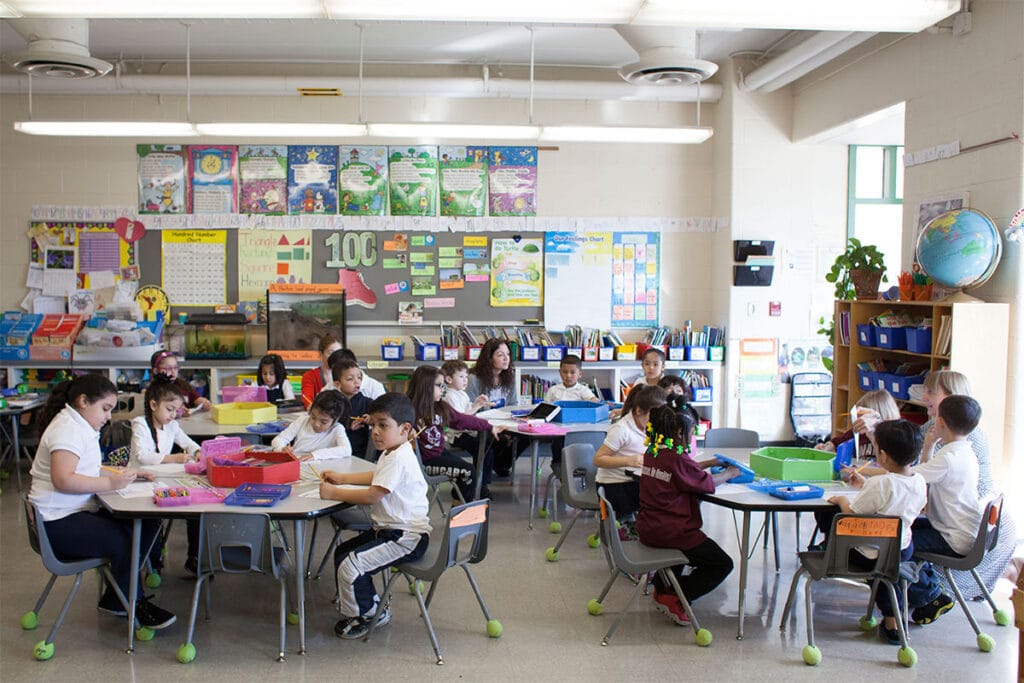
Student motivation plays an important role in how children participate in lessons, complete assignments, respond to challenges, and develop a lasting interest in learning. When students feel motivated, they are more likely to ask questions, practice new skills, and keep trying when a subject becomes difficult. However, motivation can change over time, and even capable students may lose interest when they feel overwhelmed, disconnected from lessons, or unsure how to succeed.
Teachers and schools can help by creating supportive learning environments, making lessons relevant, recognizing progress, and giving students opportunities to take an active role in their education. Finding effective ways to improve student motivation in school requires understanding what students need to feel confident, interested, and capable of making progress.
Rather than relying only on rewards or warnings, educators can use practical strategies that encourage curiosity, independence, and a sense of achievement.
What Is Student Motivation?
Student motivation is the combination of interests, goals, beliefs, and circumstances that influence a learner’s willingness to participate in educational activities. It affects whether students begin a task, how much effort they invest, and whether they continue when learning becomes challenging.
Motivation is often discussed in two broad forms.
Intrinsic motivation comes from personal interest, curiosity, or enjoyment. A student may read about space because they genuinely want to understand the universe or solve a puzzle simply because they enjoy the challenge.
Extrinsic motivation is influenced by outcomes outside the activity itself, such as grades, recognition, prizes, or meeting a requirement. These incentives can sometimes encourage students to begin a task, but learning driven only by external rewards may not create lasting interest.
Both forms can influence school behavior. The goal is not to eliminate grades or rewards, but to create learning experiences in which students understand the purpose of their work, feel capable of improving, and develop reasons to learn beyond earning a score.
Why Is Student Motivation Important?
Motivation affects how students approach everyday learning. A motivated student may be more willing to participate, seek clarification, revise mistakes, and practice until a skill improves.
Supporting motivation can help schools:
- Encourage active participation in classroom activities.
- Build confidence when students encounter difficult topics.
- Promote persistence and effective study habits.
- Help learners develop independence and responsibility.
- Support positive relationships between students and teachers.
- Encourage curiosity and lifelong learning.
Motivation alone does not guarantee high grades. Students also need effective instruction, suitable learning materials, adequate time, and appropriate support. However, a classroom that supports motivation can make it easier for students to engage with these learning opportunities.
1. Create a Positive and Supportive Classroom Environment
Students are more likely to participate when they feel respected and safe making mistakes. If they fear being laughed at for giving an incorrect answer, they may avoid asking questions or attempting unfamiliar tasks.
Teachers can build a supportive classroom by listening carefully, responding respectfully, setting clear expectations, and treating mistakes as part of the learning process.
For example, if a student gives an incorrect answer during a mathematics lesson, the teacher can ask the student to explain their thinking and then help them identify where the reasoning changed. This approach focuses on learning rather than embarrassment.
Practical ways to create a positive classroom include:
- Establishing clear and fair classroom rules.
- Encouraging students to ask questions without fear.
- Responding calmly when students struggle.
- Recognizing effort, improvement, and thoughtful problem-solving.
- Preventing teasing and unhelpful comparisons.
- Making sure all students have opportunities to contribute.
A supportive environment does not mean removing academic expectations. Students still need meaningful challenges, deadlines, and feedback, but they should also know that help is available when they need it.
2. Connect Lessons to Students’ Real Lives
Students may struggle to see the value of a lesson when it seems unrelated to their experiences or interests. Teachers can increase engagement by showing how academic concepts connect with everyday situations, future goals, and real-world problems.
For example, a mathematics lesson on percentages can use shopping discounts or sports statistics. A science lesson can explore local weather, plants, or household energy use. A writing activity can ask students to develop a proposal for improving a shared school space.
To make learning more relevant, teachers can ask:
- Where might we use this skill outside school?
- How does this topic connect with something you already know?
- What problem could we solve using this information?
- Which careers or hobbies might involve this subject?
Teachers do not need to make every lesson entertaining. Instead, they should help students understand why the knowledge matters and how it can be applied.
3. Set Clear, Achievable Academic Goals
Large goals can feel overwhelming when students do not know where to begin. Breaking them into smaller, specific steps helps learners see what progress looks like and gives them a practical way to get started.
For example, “Improve my English” is a broad goal. A more useful short-term goal might be, “Learn five new vocabulary words and use each one in a sentence by Friday.”
Teachers can help students create goals by asking them to:
- Identify one skill or topic they want to improve.
- Choose a specific action they can complete.
- Set a realistic deadline.
- Check their progress.
- Adjust the plan when necessary.
Goals should be challenging enough to encourage growth but realistic enough that students can make progress with appropriate effort and support.
Regular check-ins also help teachers recognize difficulties early. If a student repeatedly misses a goal, the answer may not be to demand more effort. The student may need clearer instructions, smaller steps, additional practice, or help managing competing responsibilities.
4. Recognize Progress and Give Constructive Feedback
Feedback helps students understand what they are doing well and what they can improve. General praise such as “Good job” may feel encouraging, but specific feedback gives learners useful information about their progress.
For example, a teacher might say, “You supported your main idea with two relevant examples,” or “You tried a different strategy when the first method did not work.”
Effective feedback should be:
- Specific: Explain what the student did well or needs to change.
- Timely: Give feedback while the task is still fresh.
- Actionable: Identify a realistic next step.
- Respectful: Focus on the work rather than labeling the student’s ability.
- Balanced: Recognize progress while maintaining clear expectations.
Avoid comparing students publicly or suggesting that success depends on being naturally intelligent. Instead, help each student understand their own progress and the strategies that contributed to it.
Constructive feedback can turn mistakes into useful information and help students approach future challenges with greater confidence.
5. Give Students Choices in Their Learning
Students may feel more involved when they have some control over how they complete an assignment. Appropriate choices can encourage ownership while allowing teachers to maintain the lesson’s learning objectives.
For example, students studying a historical event might choose to demonstrate their understanding through a written report, a presentation, or a labeled timeline. Students practicing persuasive writing could select a topic from a teacher-approved list.
Teachers can offer choices about:
- Which topic to explore within a subject.
- Which book to read from a suitable selection.
- Whether to work independently or with a partner.
- How to present learning when different formats meet the same objective.
- Which practice questions to complete first.
Choices should have clear boundaries. Too many options can create confusion, particularly for younger students. A small number of well-designed choices can give students a sense of ownership without making classroom management difficult.
6. Make Lessons Interactive and Engaging
Long periods of passive listening can make it difficult for some students to remain involved. Interactive activities give students opportunities to use information, discuss ideas, solve problems, and receive feedback.
Teachers can make lessons more engaging through:
- Short question-and-answer activities.
- Pair discussions and collaborative tasks.
- Demonstrations and simple experiments.
- Educational games connected to lesson objectives.
- Problem-solving challenges.
- Student presentations and creative projects.
- Quick reflection activities at the end of a lesson.
For example, during a science lesson on ecosystems, students might work in small groups to explain what could happen if one species disappeared from a food chain. This encourages them to apply concepts rather than simply memorize definitions.
Activities should serve a clear learning purpose. A game that is entertaining but unrelated to the lesson may not improve understanding. Teachers should connect each activity to the knowledge or skill students are expected to develop.
7. Build Confidence Through Gradual Challenges
Students who repeatedly experience failure may begin to believe they are incapable of succeeding. This belief can lead to avoidance, reduced participation, and reluctance to try unfamiliar tasks.
Teachers can build confidence by breaking complex work into manageable steps and gradually increasing the level of difficulty as students develop their skills.
For example, a student who struggles to write an essay might first practice creating a clear topic sentence, then develop a paragraph with supporting evidence, and eventually combine several paragraphs into a complete essay.
Useful approaches include:
- Reviewing prerequisite skills before introducing difficult material.
- Providing examples of successful work.
- Modeling the steps needed to complete a task.
- Offering guided practice before independent work.
- Giving students time to revise and try again.
- Gradually reducing support as skills improve.
The aim is not to make every assignment easy. Students need meaningful challenges, but those challenges should come with a realistic path toward success.
8. Encourage a Growth Mindset
A growth mindset involves recognizing that skills and understanding can develop through learning, practice, effective strategies, feedback, and support.
Students who believe their abilities cannot change may avoid difficult assignments because they fear exposing their weaknesses. Teachers can help them view challenges as opportunities to develop skills rather than as tests of their worth.
Encourage students to reflect on questions such as:
- What did I learn from this mistake?
- Which strategy helped me make progress?
- What could I try differently next time?
- What support would help me understand this topic better?
Teachers should avoid promising that effort alone guarantees success. Students also need effective strategies, appropriate resources, and useful guidance. A more helpful message is that purposeful effort, combined with feedback and suitable support, can lead to improvement.
9. Build Strong Teacher-Student Relationships
The way teachers communicate with students can influence how comfortable learners feel asking for help, participating in lessons, and returning after a setback.
A strong teacher-student relationship does not require a teacher to become a student’s friend. It involves fairness, respect, consistency, and genuine interest in the student’s learning.
Teachers can strengthen these relationships by learning students’ names, listening to their concerns, noticing changes in participation, and checking in privately when a learner seems disengaged.
For example, if a student who usually participates becomes quiet, the teacher might ask privately whether something about the lesson is difficult or whether the student needs additional support.
Avoid assuming that every student is motivated by the same approach. Some learners respond well to discussion, while others prefer written instructions or time to think before answering. Understanding these differences can help teachers offer more appropriate support.
10. Use Group Work to Encourage Collaboration
Well-planned group work allows students to exchange ideas, explain concepts, and learn from one another. It can also help students feel connected to their classroom community.
For group activities to work effectively, teachers should define the task, set expectations, and ensure that each student has a meaningful role.
For example, during a research project, one student might organize information, another might check facts, and another might prepare the presentation. Roles should rotate over time so that students develop a range of skills.
Teachers should monitor group dynamics carefully. If one student completes all the work while others remain passive, the activity may not support everyone’s learning. Clear responsibilities, individual reflection, and brief progress checks can improve participation.
Collaboration is most useful when students must think, contribute, and explain their reasoning rather than simply divide a worksheet into separate parts.
11. Make Learning Progress Visible
Students may lose motivation when they cannot see whether their effort is making a difference. Tracking progress helps learners recognize improvements that may otherwise go unnoticed.
Teachers can use simple progress tools such as:
- Reading logs that record books or passages completed.
- Writing portfolios that show drafts and revisions.
- Skills checklists that track concepts students have mastered.
- Personal learning journals.
- Charts that record individual progress toward a goal.
- Short self-assessments after a lesson.
For example, a student learning multiplication can record which types of problems they can solve independently and which still require practice. This makes the next learning step clearer.
Progress tracking should emphasize individual development rather than public rankings. The purpose is to help students understand their learning and decide what to work on next, not to create additional pressure.
12. Use Rewards Carefully
Rewards such as certificates, points, or classroom privileges can sometimes encourage participation, especially when students are beginning a new routine. However, rewards should not become the only reason students engage with schoolwork.
If every learning activity depends on a prize, some students may focus more on obtaining the reward than understanding the material. Others may lose interest when rewards are no longer available.
Teachers can use recognition more thoughtfully by:
- Acknowledging meaningful progress.
- Rewarding cooperation and responsible classroom behavior when appropriate.
- Recognizing students in ways that respect their preferences.
- Explaining the purpose of learning activities.
- Helping students notice the satisfaction that comes from mastering a skill.
Whenever possible, combine external recognition with feedback that builds competence and curiosity. A student should understand not only that they have succeeded, but also what they learned and how they can use that knowledge.
13. Support Students Who Have Lost Motivation
Low motivation can have many causes. A student may find the work too difficult, feel bored because it is not challenging enough, struggle with relationships, worry about failure, or face difficulties outside school.
Before deciding how to help, teachers should try to understand the reason for the disengagement.
A practical approach is to:
- Observe the pattern: Does the student struggle in every subject or only in particular lessons?
- Talk privately: Ask open-ended questions without accusing the student of being lazy.
- Identify barriers: Consider skill gaps, unclear instructions, workload, peer relationships, or access to learning resources.
- Agree on a small next step: Choose one achievable action with the student.
- Review progress: Check whether the support is helping and adjust it if needed.
For example, a student who avoids writing assignments may need help organizing ideas rather than more reminders to work harder. A student who finishes quickly and becomes disruptive may need more challenging tasks.
If disengagement is persistent or accompanied by significant emotional or behavioral changes, teachers should follow school procedures and involve appropriate support staff or caregivers. Teachers should not attempt to diagnose underlying conditions on their own.
14. Help Students Develop Independent Learning Habits
Motivation becomes more sustainable when students know how to plan, begin, and manage their work. Independent learning skills give students practical ways to make progress even when a teacher is not directly guiding every step.
Teachers can model habits such as:
- Breaking large assignments into smaller tasks.
- Preparing materials before beginning.
- Using a calendar or planner to track deadlines.
- Checking instructions before submitting work.
- Asking focused questions when stuck.
- Reviewing mistakes and choosing what to practice next.
Students can also use a simple reflection routine at the end of a lesson: What did I learn? What remains confusing? What will I do next?
Younger students may need visual checklists and frequent reminders, while older learners can gradually take greater responsibility for planning and evaluating their work.
Independence should develop progressively. Providing support at the beginning and reducing it as students gain confidence is often more useful than expecting them to manage everything immediately.
15. Work With Parents and Caregivers
School motivation is influenced by experiences both inside and outside the classroom. Communication between teachers and caregivers can help identify obstacles and create consistent support.
Teachers can share practical recommendations, such as establishing a manageable homework routine, providing encouragement, discussing school experiences, and recognizing progress without comparing children with siblings or classmates.
Families should be encouraged to ask open questions, such as “What was something interesting you learned today?” rather than focusing only on grades or unfinished work.
At the same time, teachers should recognize that families have different schedules, resources, and responsibilities. A helpful plan should be realistic and should not assume that every student has a quiet study room, internet access, or an adult available to help with every assignment.
When a student continues to struggle, a respectful conversation between the school and caregivers can help clarify what support may be useful.
16. Create a Classroom Culture That Values Curiosity
Curiosity encourages students to explore questions, look for explanations, and connect ideas. Teachers can support it by giving students opportunities to investigate topics instead of always providing answers immediately.
For example, before explaining a scientific concept, a teacher might present a simple observation and ask students to suggest possible explanations. Students can then test their ideas through discussion, reading, or an experiment.
Teachers can encourage curiosity by:
- Inviting students to generate questions about a topic.
- Allowing time for thoughtful discussion.
- Connecting lessons to surprising facts or real problems.
- Encouraging students to explore different approaches.
- Recognizing thoughtful questions as well as correct answers.
Not every question can become a full classroom investigation, and lessons still need structure. However, making room for student questions can help learning feel like an active process rather than a series of facts to memorize.
A Simple Weekly Plan to Improve Student Motivation
Teachers who want to put these strategies into practice can begin with a few manageable changes.
| Day | Suggested strategy | Classroom example |
|---|---|---|
| Monday | Set clear goals | Ask students to choose one specific learning goal for the week |
| Tuesday | Connect learning to real life | Use a practical example related to the current lesson |
| Wednesday | Encourage student choice | Offer two ways to complete an assignment that meet the same objective |
| Thursday | Give constructive feedback | Identify one strength and one next step in student work |
| Friday | Reflect on progress | Ask students what they learned, what challenged them, and what they will try next |
This schedule is a starting point, not a fixed formula. Teachers can adapt it to different age groups, subjects, class sizes, and learning needs. Consistency matters more than introducing every strategy at once.
How Can Schools Measure Student Motivation?
Motivation is not always visible, and no single measure captures every student’s experience. Teachers and school leaders can look for several indicators over time rather than relying on grades alone.
Possible indicators include:
- Participation in classroom discussions.
- Willingness to attempt challenging tasks.
- Completion of assignments and learning activities.
- Students’ ability to set and review goals.
- Requests for help when instructions are unclear.
- Attendance patterns and classroom engagement.
- Student feedback about lessons and learning barriers.
These indicators need context. For example, a quiet student may be highly engaged, while a student who speaks frequently may still struggle to understand the material. Teachers should combine observation with conversations, student work, and appropriate assessments.
The purpose of monitoring is to identify where learning experiences can improve, not to label students as motivated or unmotivated.
Common Mistakes That Can Reduce Student Motivation
Even well-intentioned classroom practices can discourage learners when they are applied without considering students’ needs.
Comparing students publicly: Ranking learners or highlighting one student’s performance at another’s expense can create embarrassment and unhealthy competition.
Relying only on punishment: Consequences may be necessary for certain behaviors, but punishment alone does not teach students how to overcome academic difficulties or build effective habits.
Giving unclear instructions: Students may disengage when they do not understand what a task requires or how success will be evaluated.
Setting unrealistic expectations: Goals that feel impossible can cause frustration, especially when students lack the skills or support needed to achieve them.
Using the same strategy for everyone: Students differ in their interests, strengths, prior knowledge, and learning needs. A flexible approach is often more helpful than a single method applied to every learner.
Focusing only on grades: Grades provide information about performance, but students also need feedback about strategies, understanding, progress, and next steps.
Recognizing these common mistakes helps teachers build a learning environment that combines high expectations with appropriate support.
Frequently Asked Questions
What are the best ways to improve student motivation in school?
Useful approaches include creating a supportive classroom, setting achievable goals, connecting lessons to real-life situations, giving constructive feedback, offering appropriate choices, and recognizing individual progress. The best combination depends on students’ ages, interests, and learning needs.
Why do students lose motivation at school?
Students may lose motivation because lessons feel irrelevant, tasks seem too difficult, expectations are unclear, they fear making mistakes, or they do not feel supported. Personal circumstances and learning difficulties can also affect engagement. Teachers should investigate the cause rather than assume that the student is simply unwilling to work.
How can teachers motivate students without using rewards?
Teachers can make learning meaningful, encourage curiosity, provide opportunities for choice, give specific feedback, and help students recognize their progress. These practices can support students’ sense of competence and ownership of learning.
How can parents improve a child’s motivation to learn?
Parents can show interest in what their child is learning, encourage manageable study routines, recognize progress, and discuss difficulties without shaming or comparing the child with others. If motivation remains low, communicating with teachers may help identify practical solutions.
Does student motivation improve academic performance?
Motivation can support engagement, persistence, and practice, which are important parts of learning. However, motivation does not guarantee higher grades. Academic outcomes also depend on instruction, prior knowledge, learning opportunities, resources, and individual circumstances.
How can teachers motivate students who are not interested in a subject?
Teachers can explore what students find difficult or uninteresting, connect the subject to practical examples, offer appropriate choices, and break tasks into manageable steps. Short conversations with students can help identify whether the main issue is interest, confidence, skill gaps, or another barrier.
Conclusion
Improving student motivation in school requires more than telling learners to work harder. Students need to understand the purpose of their learning, believe that progress is possible, and feel supported when they encounter challenges.
Teachers can encourage motivation by creating positive classroom environments, setting achievable goals, connecting lessons to real life, providing constructive feedback, offering meaningful choices, and recognizing progress. Schools can reinforce these efforts by supporting strong teacher-student relationships and communicating effectively with families.
There is no single strategy that works equally well for every student. The most effective approach is to understand individual needs, try practical methods, monitor progress, and adjust support when necessary. When students feel capable of learning and see value in what they are doing, they have a stronger foundation for active participation, academic growth, and lifelong learning.
