
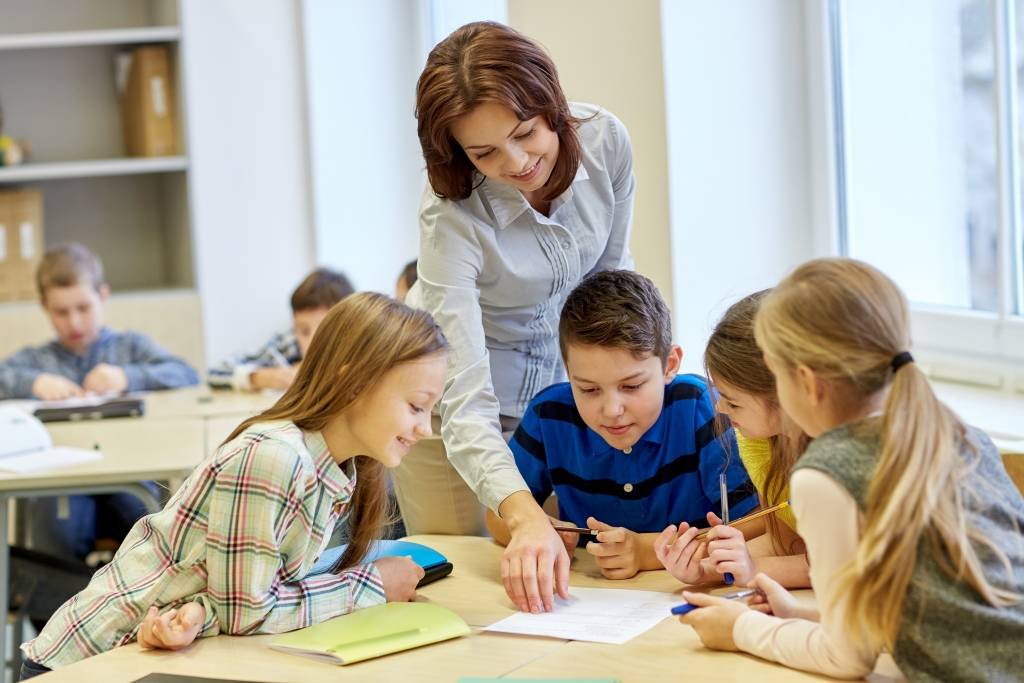
Problem-solving is one of the most important skills students can develop during their education. It helps them analyze information, make thoughtful decisions, overcome obstacles, and apply classroom knowledge to real-life situations. Instead of simply memorizing facts or following instructions, students learn to ask questions, evaluate possibilities, test ideas, and explain why a solution works.
Teachers can develop these abilities by incorporating problem solving activities for students into everyday classroom instruction. From teamwork challenges and science experiments to mathematical puzzles and real-world projects, these activities give students opportunities to practise reasoning in meaningful situations.
Classroom challenges also encourage communication, creativity, persistence, and collaboration. When students are given an interesting problem and enough guidance to explore possible solutions, they can learn from both their successes and their mistakes.
This guide explains why problem-solving skills matter, how teachers can teach a structured problem-solving process, and which practical classroom activities can help students become more independent and confident learners.
Why Are Problem-Solving Skills Important for Students?
Problem-solving involves identifying a challenge, understanding the information available, developing possible solutions, and deciding which approach is most appropriate. Students use these skills in mathematics, science, reading, social situations, and everyday decision-making.
1. Develops critical thinking
Students must distinguish relevant information from distractions, examine evidence, and evaluate different possibilities. For example, when investigating why a plant is not growing well, students might consider the amount of sunlight, water, soil quality, and temperature before deciding what to test.
This process encourages students to support their conclusions with reasons instead of guessing.
2. Encourages creativity and flexible thinking
Many classroom problems have more than one possible solution. A design challenge, for example, may allow students to build several different structures using the same materials.
When students compare approaches, they learn that a problem can often be solved in different ways. They also become more willing to revise an idea when their first attempt does not work.
3. Builds confidence and persistence
A challenging task can teach students that mistakes are part of learning. Rather than treating an unsuccessful attempt as a failure, teachers can encourage students to identify what happened, adjust their strategy, and try again.
Over time, this approach can help students become more comfortable with unfamiliar tasks and complex questions.
4. Strengthens communication and teamwork
Group challenges require students to explain ideas, listen to different perspectives, share responsibilities, and reach decisions. These experiences help them practise respectful disagreement and learn how to combine individual contributions into a shared solution.
5. Connects classroom learning with real life
Students often understand a concept more clearly when they apply it to a practical situation. Planning a class event, reducing classroom waste, designing a simple bridge, or comparing the costs of different purchases can connect academic knowledge with everyday decisions.
How to Teach a Problem-Solving Process in the Classroom
Before introducing classroom challenges, teachers should help students understand that problem-solving is a process. A clear framework gives students a starting point without forcing them to follow a single strategy for every situation.
One practical approach uses six steps.
Step 1: Identify and define the problem
Students should first explain what needs to be solved. A vague statement such as “Our classroom is messy” can be turned into a more specific problem: “How can we organize classroom materials so students can find and return them easily?”
A clearly defined problem makes it easier to identify relevant information and develop useful solutions.
Teacher prompt: What exactly needs to change, and how will we know whether the problem has been solved?
Step 2: Gather relevant information
Students should identify what they already know, what information they still need, and which conditions or limits must be considered.
For a bridge-building challenge, they might need to know the available materials, the maximum bridge length, and how much weight the bridge must support.
Teachers can help students separate facts from assumptions and identify missing information before they begin.
Step 3: Generate possible solutions
Encourage students to suggest several approaches before choosing one. Brainstorming allows them to explore alternatives and reduces the temptation to accept the first idea that comes to mind.
For example, students trying to reduce paper waste might suggest using both sides of paper, creating a scrap-paper tray, sharing digital documents, or improving recycling arrangements.
At this stage, encourage students to explain their ideas without dismissing every suggestion immediately.
Step 4: Compare and select a solution
Students should evaluate each proposed solution against the problem’s requirements.
Useful questions include:
- Which solution addresses the main problem?
- What materials, time, or information will it require?
- What are its advantages and disadvantages?
- Is it safe, practical, and fair?
- How will we measure success?
The best solution is not always the most complicated or creative. It is the approach that meets the requirements most effectively.
Step 5: Test the solution
Students put their chosen approach into practice through an experiment, model, written plan, simulation, or real-world action.
If they are building a paper bridge, they can test how much weight it holds. If they are planning a more organized classroom, they can try their arrangement for several days and observe whether materials are easier to locate.
Testing provides evidence about whether the solution works.
Step 6: Reflect and improve
After testing, students should explain what happened, what they learned, and what they would change.
A short reflection might include:
- What worked well?
- What did not work as expected?
- What evidence supports our conclusion?
- Which changes could improve the result?
- Would another solution work better?
This final step helps students recognize that problem-solving often involves revising and improving ideas rather than finding an immediate perfect answer.
12 Practical Problem Solving Activities for Students
The following activities can be adapted for elementary, middle, or secondary classrooms. Teachers should adjust the complexity, available materials, time limits, and level of guidance according to students’ ages and learning needs.
1. The Paper Bridge Challenge
Best for: Grades 3–8
Skills developed: Engineering design, measurement, critical thinking, experimentation, and teamwork.
Materials: Paper, tape, books or blocks, and small objects to use as weights.
How to conduct the activity:
- Divide students into small groups.
- Give each group the same amount of paper and tape.
- Ask students to design a bridge that spans a gap between two books or blocks.
- Set a clear requirement, such as supporting as many small weights as possible without collapsing.
- Let groups test their designs and record the results.
- Give students time to revise their bridges and test them again.
Discussion questions:
- Which design held the most weight?
- How did the shape affect the bridge’s strength?
- What changed between the first and second attempts?
- What would you test if you had more materials?
This activity makes the relationship between design, evidence, and improvement visible. Students can also compare different designs to see why a single challenge may have multiple successful solutions.
2. The Classroom Escape Puzzle
Best for: Grades 4–9
Skills developed: Logical reasoning, sequencing, collaboration, and attention to detail.
Create a series of age-appropriate puzzles that students must solve to reveal a final code or answer. Puzzles might include number patterns, word clues, simple ciphers, map directions, or questions based on a recent lesson.
How to conduct the activity:
- Divide students into small teams.
- Provide the first puzzle and explain how to submit an answer.
- Each correct answer reveals the next clue.
- Encourage teams to record their reasoning rather than only writing final answers.
- Finish with a discussion about the strategies that helped students solve the puzzles.
Make sure the puzzles assess the intended skills rather than relying on obscure trivia. Provide hints when needed so students remain challenged without becoming stuck for the entire lesson.
3. Design a Solution to a School Problem
Best for: Grades 5–12
Skills developed: Research, planning, decision-making, communication, and civic responsibility.
Ask students to identify a manageable issue at school, such as wasted paper, disorganized supplies, unnecessary classroom noise, or limited opportunities to share books.
Students then investigate the issue, suggest solutions, and develop a realistic action plan.
Steps:
- Define the problem clearly.
- Gather observations or simple survey results.
- Identify possible causes.
- Brainstorm several solutions.
- Compare the options using agreed criteria.
- Present the recommended solution to the class.
For example, students investigating paper waste could estimate how much unused paper accumulates in a week and propose a system for reusing scrap paper.
Keep the project within students’ authority and school safety rules. If it involves changes to school facilities or policies, obtain the necessary staff approval.
4. The Limited-Materials Tower Challenge
Best for: Grades 2–8
Skills developed: Creativity, spatial reasoning, planning, cooperation, and testing.
Give each group a small set of materials, such as drinking straws, paper, tape, or craft sticks. Ask them to build the tallest freestanding tower they can within a set time.
To make the task more meaningful, establish clear rules: the tower must stand without being held, use only the supplied materials, and remain upright for a specified period.
After testing the towers, ask students to explain their design choices. They can then rebuild their structures using what they learned.
This activity teaches students to manage constraints, divide responsibilities, and improve a design using evidence from the first attempt.
5. Real-Life Mathematics Challenges
Best for: Grades 3–12
Skills developed: Numeracy, budgeting, estimation, reasoning, and decision-making.
Present students with realistic situations that require mathematical thinking.
Possible challenges include:
- Plan a class celebration within a fixed budget.
- Compare the costs of different school supplies.
- Calculate the amount of paint needed for a classroom display.
- Determine the most efficient route through a simple map.
- Adjust a recipe to serve a different number of people.
For example, give students a fictional budget of $60 for a class activity and a list of items with prices. Ask them to select the items that best meet the group’s needs without exceeding the budget.
Require students to show their calculations and explain their decisions. More than one answer may be acceptable if the budget is respected and the reasoning is sound.
6. The Science Investigation Challenge
Best for: Grades 3–10
Skills developed: Hypothesis formation, observation, experimentation, evidence evaluation, and scientific reasoning.
Give students a question that can be explored through a safe, simple investigation.
Examples include:
- Which paper towel absorbs the most water?
- Which design makes a paper airplane travel farthest?
- How does the amount of light affect a plant’s growth over time?
- Which material keeps water warm for the longest period?
Students should identify the question, predict what might happen, plan a fair test, record observations, and use evidence to explain their conclusions.
For a fair comparison, help students identify which variable they will change and which conditions they should keep the same.
Avoid treating an unexpected result as failure. Ask students what the evidence shows and whether their method needs improvement.
7. The Mystery Object or Odd-One-Out Challenge
Best for: Grades 1–7
Skills developed: Classification, observation, reasoning, explanation, and flexible thinking.
Display a group of objects, pictures, words, or shapes. Ask students to identify which item does not belong and explain their reasoning.
For example, show four shapes that differ in colour, number of sides, or size. Depending on the selected rule, different answers may be defensible.
The goal is not always to find one hidden answer. It is to help students recognize patterns and support their conclusions with clear reasoning.
Teacher prompt: Can you identify another rule that would lead to a different answer?
This question encourages students to examine assumptions and appreciate that the quality of an explanation matters as much as the selected item.
8. The Lost-on-an-Island Scenario
Best for: Grades 4–9
Skills developed: Prioritization, teamwork, decision-making, communication, and justification.
Present students with a fictional scenario: a group is stranded on an island and must choose a limited number of items from a list of supplies.
Students must agree on which items are most important, explain their choices, and respond to new information introduced by the teacher.
For example, the teacher might reveal that the group has access to fresh water but must remain safe during a storm. Students then reconsider their priorities.
Keep the scenario age-appropriate and emphasize reasoning rather than survival expertise. The exercise is designed to practise decision-making under constraints, not to teach real emergency procedures.
9. The Step-by-Step Instructions Challenge
Best for: Grades 2–8
Skills developed: Logical thinking, sequencing, clarity, debugging, and computational thinking.
Ask students to write precise instructions for completing a simple task, such as arranging classroom materials, drawing a shape, or moving through a paper maze.
A partner follows the instructions exactly as written. If the directions are unclear or incomplete, the partner identifies where the process breaks down.
Students then revise their instructions and test them again.
This activity demonstrates why problem-solving requires clear steps and careful checking. It also introduces ideas used in computer programming, including sequencing, conditions, repetition, and debugging.
10. The Community Improvement Project
Best for: Grades 5–12
Skills developed: Research, empathy, collaboration, planning, and responsible decision-making.
Ask students to identify a small issue affecting their school or community that they can investigate respectfully and safely.
Possible topics include keeping a shared space clean, improving access to reading materials, reducing food waste, or making classroom instructions easier to understand.
Students should collect relevant information, identify possible causes, compare solutions, and propose an action that is realistic for their age and authority.
They can present their findings in a report, poster, model, or short presentation.
Avoid asking students to investigate sensitive personal issues or collect private information about other people. Choose projects that protect student privacy and do not require students to solve problems beyond their control.
11. The Story Problem Challenge
Best for: Grades 2–8
Skills developed: Reading comprehension, inference, sequencing, reasoning, and creative thinking.
Give students a short story that ends with a problem. Ask them to explain the problem, identify clues in the text, and propose several possible endings.
For example, a character might need to deliver an important package before a storm begins. Students can consider the available routes, the time limit, and possible obstacles before suggesting a solution.
Ask students to identify which details in the story influenced their decisions. This encourages them to use evidence rather than relying entirely on imagination.
The activity can also support literacy lessons by asking students to write a revised ending and explain why their chosen solution makes sense.
12. The Group Design Challenge
Best for: Grades 4–12
Skills developed: Innovation, teamwork, planning, presentation, and reflection.
Give each group a design problem related to the current curriculum. Students might create a model water filter using approved materials, design a low-cost book organizer, or develop a simple reminder system for classroom responsibilities.
Each group should submit:
- A clear problem statement
- A list of requirements and limitations
- At least two possible solutions
- A sketch or plan of the selected design
- A test or demonstration
- A reflection explaining possible improvements
Assessment should focus on the quality of the reasoning, the use of evidence, the suitability of the design, and the group’s ability to learn from testing—not only on which group produces the most attractive model.
How to Adapt Problem-Solving Activities by Grade Level
Students need different levels of complexity and support as their skills develop. Teachers should adjust challenges to match students’ prior knowledge, reading ability, confidence, and learning objectives.
| Grade level | Suitable challenge types | Teacher’s role |
|---|---|---|
| Grades 1–3 | Sorting puzzles, simple mazes, building tasks, picture patterns | Model the steps, use concrete materials, and ask guided questions. |
| Grades 4–5 | Paper bridges, number puzzles, science investigations, classroom planning | Encourage students to record ideas and compare possible solutions. |
| Grades 6–8 | Budget challenges, escape puzzles, structured experiments, design projects | Promote evidence-based reasoning, teamwork, and independent reflection. |
| Grades 9–12 | Community projects, complex investigations, design briefs, real-world case studies | Encourage research, evaluation of trade-offs, and justified decisions. |
These categories are flexible rather than strict rules. A younger student may be ready for a more advanced task with appropriate support, while an older student may benefit from a simpler challenge that develops a missing foundational skill.
How to Organize Effective Classroom Challenges
A well-designed activity needs more than an interesting problem. Teachers should decide what students should learn, how they will work, what support they need, and how their reasoning will be evaluated.
Set a clear learning objective
Choose the specific skill the activity should develop. For example, a bridge challenge may focus on testing designs, while a budgeting activity may focus on mathematical reasoning and comparing options.
A clear objective helps teachers select an appropriate task and decide what evidence of learning to collect.
Establish rules and constraints
Explain the available materials, time limit, safety requirements, and success criteria before students begin. Constraints make a challenge meaningful, but unnecessary restrictions can prevent students from demonstrating what they know.
Organize groups thoughtfully
Small groups can support discussion and shared responsibility. Give students clear roles when useful, such as facilitator, recorder, materials manager, and presenter. Rotate these roles so every student has opportunities to contribute.
For tasks where individual understanding matters, include an individual reflection or explanation alongside the group result.
Provide guidance without giving away the solution
Teachers can support students by asking questions rather than immediately supplying answers.
Useful prompts include:
- What do you already know?
- What information is missing?
- Which part of the problem should you address first?
- What other approaches could work?
- How could you test your idea?
- What evidence supports your conclusion?
If students are stuck, provide a small hint or model one part of the process. The aim is to keep the challenge productive while helping students develop independent strategies.
Allow time for revision
Avoid ending the activity immediately after the first attempt. Students need time to evaluate results, reconsider assumptions, and improve their solutions.
Even a brief second attempt can reveal whether students understand how to use evidence to make changes.
How to Assess Students’ Problem-Solving Skills
A correct final answer does not always show how well a student understands the problem-solving process. Likewise, an incorrect answer may reveal useful reasoning that needs further development.
Teachers should assess both the outcome and the thinking that led to it.
Use a simple problem-solving rubric
The following rubric can be adapted for different activities.
| Criterion | What the teacher looks for |
|---|---|
| Problem identification | The student clearly explains the challenge. |
| Planning | The student considers relevant information and possible approaches. |
| Reasoning | The student explains why a selected approach may work. |
| Testing and revision | The student uses results or feedback to improve the solution. |
| Communication | The student presents ideas clearly and listens to others. |
| Reflection | The student identifies what was learned and what could change next time. |
Teachers can use a simple scale, such as Beginning, Developing, Proficient, and Advanced, to describe progress.
Do not assume that every criterion is equally important in every task. For example, a short sequencing puzzle may place more emphasis on logic, while a community project may require stronger research and communication skills.
Use student reflection
After a challenge, ask students to complete a short reflection:
- What was the main problem?
- Which solution did I choose, and why?
- What evidence showed whether it worked?
- What was the most difficult part?
- What would I change next time?
These questions help students notice their own strategies and give teachers insight into what students understand.
Encourage peer feedback
Students can review one another’s solutions using a small set of clear criteria. Ask them to identify one strength, one question, and one possible improvement.
Peer feedback should focus on the quality of the work and the reasoning behind it, not personal criticism.
Common Mistakes to Avoid When Teaching Problem-Solving
Giving students the answer too quickly
When teachers immediately explain the solution, students lose opportunities to explore possibilities and practise reasoning. Provide enough guidance to keep students moving, but allow them to make meaningful decisions.
Making every challenge a competition
Competition can add excitement, but it may discourage students who need more time or who are less comfortable working under pressure. Include cooperative challenges and recognize thoughtful reasoning, improvement, and teamwork.
Treating mistakes as failure
An unsuccessful attempt can provide useful evidence. Help students identify what went wrong and decide how to improve their approach.
Focusing only on the final result
A successful model or correct answer does not necessarily show that every student understands the process. Ask students to explain their choices and reflect on their results.
Making activities too difficult or too easy
A challenge should require students to think without overwhelming them. Adjust the number of steps, materials, instructions, or hints according to the class’s needs.
Ignoring individual participation
Group work can allow some students to dominate while others remain passive. Rotate roles, ask every student to contribute an idea, and include individual reflections when appropriate.
Frequently Asked Questions
1. What are the best problem solving activities for students?
Effective activities include design challenges, mathematical puzzles, science investigations, classroom improvement projects, budgeting exercises, sequencing tasks, and collaborative problem-solving games. The best activity depends on the students’ ages, prior knowledge, and learning objectives.
2. How do classroom challenges improve critical thinking?
Classroom challenges ask students to define problems, analyze information, compare possibilities, justify decisions, and evaluate results. These steps give students opportunities to practise reasoning instead of simply recalling facts or following a memorized procedure.
3. How can teachers teach problem-solving skills to younger students?
Teachers can use picture puzzles, sorting activities, building tasks, simple mazes, and everyday classroom situations. Demonstrating the steps aloud, using concrete materials, and asking guiding questions can help younger learners understand how to approach a problem.
4. How can problem-solving activities support teamwork?
Group challenges encourage students to share ideas, divide responsibilities, listen to different viewpoints, and agree on a solution. Clear roles and individual reflection can help ensure that all group members participate and learn.
5. Should students work individually or in groups?
Both approaches are valuable. Individual activities help teachers see each student’s reasoning, while group tasks provide opportunities to explain ideas and compare strategies. A balanced lesson can begin with individual thinking, continue with group discussion, and finish with individual reflection.
6. How can teachers assess problem-solving skills?
Teachers can evaluate how students define a problem, plan a solution, explain their reasoning, test their ideas, revise their approach, and reflect on results. Rubrics, observation notes, student explanations, and project records can provide useful evidence.
7. How often should teachers use problem-solving activities?
Teachers can incorporate short problem-solving tasks into regular lessons and use longer challenges when they fit the learning objectives. Consistent practice is generally more practical than relying only on occasional large projects.
8. What is the difference between problem-solving and critical thinking?
Critical thinking involves analyzing information, examining assumptions, and evaluating evidence. Problem-solving uses these abilities to address a particular challenge or achieve a goal. The two skills often overlap and can be developed together through well-designed classroom activities.
Conclusion
Teaching problem-solving skills through classroom challenges gives students opportunities to apply knowledge, think critically, collaborate with others, and learn from experience. Activities such as bridge-building, science investigations, budgeting exercises, logic puzzles, and school improvement projects can make learning more active and meaningful.
The most effective problem solving activities for students have clear objectives, appropriate levels of challenge, opportunities to test ideas, and time for reflection. Teachers should focus not only on whether students reach the correct answer but also on how they define problems, evaluate options, use evidence, and improve their approaches.
By making problem-solving a regular part of classroom learning, educators can help students become more independent thinkers and more confident learners. These skills can support academic progress while preparing students to approach unfamiliar challenges in everyday life
