
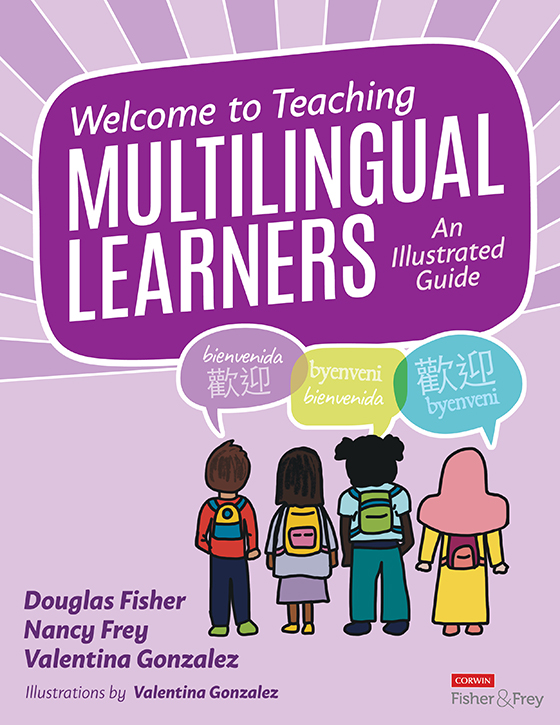
Classrooms are becoming increasingly linguistically diverse, bringing together students who speak different languages, come from varied cultural backgrounds, and have different experiences with formal education. This diversity creates valuable opportunities for students to learn from one another, but it also requires teachers to plan lessons that make learning accessible to everyone.
Students who use multiple languages may understand complex ideas in one language while still developing the vocabulary and academic language needed to express those ideas in English or the language of instruction. Teachers should therefore avoid assuming that limited proficiency in the classroom language means a student lacks knowledge, intelligence, or learning potential.
Effective teaching strategies for multilingual students combine clear instruction, language development, meaningful participation, and respect for students’ linguistic and cultural backgrounds. Teachers can support learning by connecting new concepts to prior knowledge, using visual resources, providing structured opportunities for speaking and writing, and assessing both subject understanding and language development appropriately.
This guide explores practical ways to support multilingual learners, explains how to adapt classroom instruction without lowering expectations, and offers activities that help students develop academic language while learning grade-level content.
Who Are Multilingual Students?
Multilingual students use or are developing proficiency in more than one language. They may speak one language at home and another at school, use several languages with family and friends, or have experience learning through different languages.
Some students are highly proficient in their home language but new to the language used in the classroom. Others may be developing literacy in more than one language at the same time. Students also differ in their prior schooling, reading experiences, subject knowledge, and familiarity with academic vocabulary.
These differences matter because multilingual students are not a single, uniform group. A strategy that helps a beginner understand classroom instructions may not provide enough challenge for a student who communicates fluently but needs support with specialized academic language.
Teachers should learn about each student’s strengths, language experiences, and learning needs before deciding which supports are appropriate.
Why Effective Teaching Strategies for Multilingual Students Matter
Language plays a central role in classroom learning. Students use it to understand instructions, explain reasoning, participate in discussions, interpret textbooks, and demonstrate their knowledge.
When teachers make academic content understandable while supporting language development, multilingual students have more opportunities to participate meaningfully.
1. Improves access to academic content
Students may understand a scientific concept but struggle to explain it using unfamiliar vocabulary. Visuals, demonstrations, examples, and carefully structured explanations help make the concept more accessible.
The goal is to remove unnecessary language barriers without removing the important thinking required by the lesson.
2. Develops academic vocabulary
Academic language often differs from everyday conversation. Students may need explicit instruction in words such as compare, justify, interpret, evidence, and consequence.
Teaching these words in context helps students understand what classroom tasks require and how to communicate their ideas accurately.
3. Encourages classroom participation
Students may hesitate to speak when they are unsure of their pronunciation, vocabulary, or grammar. Structured partner discussions, rehearsal time, and supportive sentence starters give them ways to participate without requiring immediate, unsupported responses in front of the whole class.
4. Builds confidence and belonging
Students are more likely to engage when their languages and experiences are treated respectfully. Teachers can build a welcoming environment by learning how to pronounce students’ names, including diverse perspectives in lessons, and making it clear that language development is a normal part of learning.
5. Supports stronger assessment
A student’s answer may be affected by both subject understanding and language proficiency. Teachers should consider what each assessment is intended to measure and provide appropriate ways for students to demonstrate their learning.
For example, if the goal is to assess a science concept rather than extended English writing, a diagram with labels or an oral explanation may provide useful additional evidence of understanding.
12 Effective Strategies for Teaching Multilingual Students
The following strategies can be adapted for elementary, middle, and secondary classrooms. Teachers should select them according to students’ language proficiency, age, subject, prior knowledge, and learning objectives.
1. Learn About Students’ Language Backgrounds
Effective teaching begins with understanding the students in the classroom. Teachers should learn which languages students use, how comfortable they feel reading and writing in each language, and what prior educational experiences they bring.
Useful questions include:
- Which languages do you use at home and at school?
- In which language do you feel most comfortable discussing a new idea?
- Have you studied this topic before?
- Which kinds of classroom activities help you understand new information?
- Are there words or instructions that are especially difficult to understand?
Collect this information respectfully and protect students’ privacy. Avoid making assumptions about a student’s language ability based on nationality, accent, appearance, or the language spoken by their family.
Practical example: Before starting a unit on ecosystems, ask students what they already know about plants, animals, habitats, and food chains. Their answers can reveal prior knowledge even when they are still learning the classroom language.
2. Connect New Learning to Prior Knowledge
New concepts are easier to understand when students can connect them with familiar ideas and experiences.
Before introducing a topic, invite students to discuss what they already know, examine an image, sort examples, or make predictions. This helps teachers identify existing understanding and gives students a starting point for learning new vocabulary.
For example, before teaching fractions, a teacher might use pictures of divided fruit or paper shapes. Students can discuss how the pieces relate to a whole before learning the mathematical terms.
Use examples from a variety of everyday contexts so that students with different experiences can find relevant connections.
3. Teach Academic Vocabulary Explicitly
Students need opportunities to learn the words and phrases used in academic tasks. Simply displaying a vocabulary list is rarely enough for deep understanding.
Select a manageable number of important words for each lesson and teach them through explanation, examples, visuals, and repeated use.
A practical vocabulary routine includes:
- Introduce the word and explain its meaning in student-friendly language.
- Show an example, image, object, or short demonstration.
- Use the word in a sentence related to the lesson.
- Ask students to discuss or write their own examples.
- Revisit the word in later lessons.
For instance, when teaching the word compare, explain that students should identify similarities and differences. Model a comparison between two animals or historical events, then ask students to practise using the word.
Teach words that are central to understanding the content as well as words that frequently appear in instructions, such as describe, summarize, and evaluate.
4. Use Visuals, Demonstrations, and Real Objects
Visual supports can make explanations clearer and reduce the amount of unfamiliar language students must process at once.
Teachers can use:
- Photographs and diagrams
- Maps, charts, and timelines
- Real objects and models
- Demonstrations and experiments
- Labeled illustrations
- Graphic organizers
- Short videos with appropriate captions
For example, a teacher introducing the water cycle can display a labeled diagram, demonstrate evaporation with a simple classroom example, and then guide students through the stages using arrows.
Visuals should support the learning objective rather than decorate the lesson. Teachers should also explain the meaning of important symbols, labels, and relationships instead of assuming students will interpret them automatically.
5. Give Clear Instructions in Manageable Steps
Long, complicated instructions can create unnecessary barriers for students who are developing proficiency in the classroom language.
Use concise language, explain unfamiliar terms, and break multi-step tasks into smaller stages. Provide written directions alongside oral explanations when appropriate.
Instead of saying, “Analyze the sources, evaluate their credibility, synthesize the findings, and present a supported conclusion,” a teacher might display the steps separately:
- Read each source.
- Identify who created it and why.
- Check which facts or evidence it provides.
- Compare the information.
- Write a conclusion supported by evidence.
Ask students to explain the first step or demonstrate what they should do before independent work begins.
Clear instructions benefit the entire class, not only multilingual students.
6. Use Sentence Starters and Language Frames
Sentence starters provide students with a structure for expressing ideas while they develop academic language.
Examples include:
- “I noticed that…”
- “The main difference between these examples is…”
- “I agree with this idea because…”
- “The evidence suggests that…”
- “One possible explanation is…”
- “My solution works because…”
In science, students might use, “I predict that ___ because ___.” In social studies, they might write, “One cause of ___ was ___.”
Language frames should support thinking rather than dictate the answer. As students become more confident, gradually reduce the prompts so they can communicate independently.
7. Encourage Structured Partner and Group Discussions
Speaking practice helps students develop vocabulary, organize ideas, and learn from their classmates. However, simply placing students in groups does not guarantee meaningful participation.
Give discussions a clear purpose, provide enough thinking time, and assign roles when useful.
A simple routine is Think, Pair, Share:
- Students think individually about a question.
- They discuss their ideas with a partner.
- They share selected ideas with the class.
Before the discussion, introduce essential vocabulary and provide sentence starters if needed. Allow students to rehearse their ideas before speaking to a larger audience.
For group tasks, rotate roles such as facilitator, recorder, materials manager, and presenter. This helps ensure that multilingual students participate in substantive work rather than being assigned only passive or non-academic responsibilities.
8. Use Students’ Home Languages as Learning Resources
A student’s home language can be a valuable resource for understanding new concepts. When appropriate and permitted by the learning context, students can use bilingual dictionaries, compare vocabulary across languages, discuss ideas in a familiar language, or draft initial thoughts before expressing them in the classroom language.
For example, students investigating a historical event might first organize what they know in their strongest language and then work on key academic terms in English.
Teachers do not need to speak every language represented in the classroom to recognize its value. They can encourage thoughtful language use while ensuring students also receive the practice required to develop proficiency in the language of instruction.
Avoid treating home-language use as evidence that a student is unwilling to learn. Strategic use of familiar languages can support comprehension, identity, and the development of new knowledge.
9. Model Thinking Aloud
Students may understand individual words but still struggle to follow the reasoning required by a task. A think-aloud makes the teacher’s decision-making process visible.
For example, while reading a science passage, the teacher might say:
“I see that this paragraph describes a change in temperature. I will look for the sentence that explains what caused the change. This diagram may help me connect the information.”
The teacher then demonstrates how to identify key details, use context clues, ask questions, or check an answer.
Think-alouds are useful across subjects. A mathematics teacher can model how to interpret a word problem, while a history teacher can demonstrate how to distinguish a source’s claim from its supporting evidence.
After modelling, guide students through a similar task before asking them to work independently.
10. Adapt Assessment Without Lowering Learning Expectations
Teachers need to know whether students understand the subject matter and whether they can express that understanding in the required language. These are related but not identical questions.
When appropriate to the learning objective, students might demonstrate understanding through:
- Diagrams with labels
- Oral explanations
- Demonstrations or models
- Short written responses
- Graphic organizers
- Bilingual planning notes
- Structured presentations
For example, if a lesson assesses the stages of a plant’s life cycle, a labeled diagram and oral explanation may provide useful evidence of understanding. If the objective specifically assesses academic writing, written language should remain part of the assessment.
Teachers should follow school assessment policies and provide accommodations that are appropriate to the student’s needs. Language support should make the task accessible without changing the essential knowledge or skill being assessed.
11. Provide Helpful Feedback on Both Content and Language
Feedback should help students understand what they did well and what they can improve next.
When reviewing work, teachers can distinguish between the quality of the student’s idea and the language used to communicate it. This is especially important when an assignment primarily assesses subject knowledge.
For example, a teacher might say:
“Your explanation correctly identifies the cause of the event. In your next draft, let’s work on connecting the ideas with words such as ‘because,’ ‘therefore,’ and ‘as a result.'”
Focus on a small number of important language goals at a time. Correcting every error at once can overwhelm students and make them reluctant to participate.
Use feedback that is specific, respectful, and actionable. Whenever possible, allow students to revise their work and apply the feedback.
12. Create a Culturally and Linguistically Inclusive Classroom
Students should see that different languages, experiences, and perspectives are respected in the classroom.
Teachers can support inclusion by choosing texts from a range of cultural contexts, inviting students to contribute knowledge when they wish, and avoiding activities that assume every student shares the same family traditions or experiences.
Useful practices include:
- Learning and correctly pronouncing students’ names
- Displaying multilingual greetings where appropriate
- Selecting books and examples featuring varied backgrounds
- Offering different ways to participate
- Establishing clear expectations against teasing and language-based discrimination
- Encouraging respectful curiosity about different perspectives
Do not ask a student to represent an entire language group or culture. Students should be free to share personal knowledge without being placed in the role of a spokesperson.
Classroom Activities for Multilingual Learners
Practical activities give students opportunities to practise academic language while learning content. The following examples can be adapted for different grade levels and subjects.
Activity 1: Picture Vocabulary Match
Purpose: Build vocabulary and connect words with concepts.
Materials: Picture cards, vocabulary cards, and simple definitions.
Instructions:
- Select key words from the current lesson.
- Prepare pictures or diagrams that represent the words.
- Ask students to match each word with the correct visual.
- Invite students to explain their choices using a sentence frame.
- Review the words again during a later lesson.
For a science unit, students might match terms such as habitat, predator, prey, and adaptation with appropriate images.
Activity 2: Think, Pair, Share
Purpose: Develop speaking, listening, and academic reasoning.
Instructions:
- Ask a question connected to the lesson.
- Give students quiet time to organize their thoughts.
- Provide useful sentence starters if needed.
- Let students discuss their answers with a partner.
- Invite volunteers to share ideas with the class.
For example, after a reading passage, ask, “Which detail best supports the author’s main point?”
Students can practise explaining their reasoning before speaking in front of the whole class.
Activity 3: The Vocabulary Concept Map
Purpose: Show relationships between academic words and ideas.
Write a key term in the center of a page. Students add a definition, examples, related words, a picture, and a sentence using the term.
For example, a concept map for ecosystem could include plants, animals, water, sunlight, and relationships between living and non-living things.
This activity helps students understand how a word connects to a wider concept rather than memorizing a definition in isolation.
Activity 4: Demonstrate and Explain
Purpose: Combine practical learning with language development.
Ask students to complete a simple task, such as building a geometric shape, carrying out a safe science demonstration, or arranging a sequence of historical events.
Afterward, students explain what they did using a sequence frame:
“First, we ___. Next, we ___. Then, we ___. Finally, we observed ___.”
This activity develops subject knowledge and gives students structured practice with sequence words and explanatory language.
Activity 5: Read, Discuss, and Summarize
Purpose: Develop comprehension, academic vocabulary, and summarizing skills.
Choose a short text that aligns with the lesson. Introduce essential vocabulary before reading, and provide a clear question for students to consider.
After reading, students identify the main idea, discuss one important detail with a partner, and write a short summary.
Teachers can use a frame such as, “The text mainly explains ___. One important detail is ___.”
As students gain confidence, remove the frame and ask them to summarize independently.
Differentiating Instruction for Different Levels of Language Proficiency
Multilingual students may need different types of support depending on their current language development and subject knowledge. Teachers should avoid assigning identical scaffolds to every learner.
| Student need | Helpful teaching approaches | Example |
|---|---|---|
| Beginning classroom-language proficiency | Visuals, gestures, demonstrations, short instructions, key vocabulary | Match science words to diagrams before explaining them orally. |
| Developing proficiency | Sentence frames, partner discussion, guided reading, vocabulary practice | Explain a mathematical solution using a structured sentence. |
| More advanced academic language development | Subject-specific vocabulary, complex texts, extended writing, critical discussion | Compare two historical sources and justify a conclusion. |
| Strong subject knowledge but developing writing | Graphic organizers, oral rehearsal, models of academic writing | Explain an idea orally before drafting a paragraph. |
| Developing literacy in more than one language | Appropriate reading support, bilingual resources when available, explicit literacy instruction | Compare how key concepts are represented across languages. |
These examples are starting points, not fixed categories. A student may be confident speaking about familiar topics but need substantial support with academic writing or specialized vocabulary.
Regular observation, student work, discussion, and appropriate assessment can help teachers determine when to introduce, adjust, or remove support.
Common Challenges When Teaching Multilingual Students
Limited access to academic vocabulary
Students may understand a concept but not the words needed to discuss it. Teach essential vocabulary explicitly and revisit it across lessons.
Reluctance to speak in front of the class
Students may worry about making mistakes or being judged. Provide rehearsal time, partner discussions, and low-pressure opportunities to contribute before expecting public responses.
Difficulty understanding long instructions
Break complex directions into steps, provide written support, and model the first part of a task. Ask students to explain what they need to do before starting.
Different levels of prior schooling
Students may have studied different topics or experienced interruptions in formal education. Use diagnostic activities and prior-knowledge questions to identify what students already know.
Confusing language development with subject understanding
A student who cannot yet explain an idea fluently may still understand important aspects of it. Use suitable assessment methods to gather evidence of content knowledge while continuing to develop academic language.
Limited classroom resources
Teachers can support multilingual learners with simple materials such as drawings, objects, word cards, graphic organizers, and structured discussion routines. Expensive technology is not required for many effective strategies.
How Teachers Can Monitor Progress
Supporting multilingual learners is an ongoing process. Teachers should monitor both content learning and development in the language skills needed for classroom participation.
Observe participation
Notice whether students can follow instructions, contribute to pair discussions, ask for clarification, and explain their ideas using the support provided.
Review student work
Compare students’ work over time to identify improvements in vocabulary, comprehension, reasoning, organization, and written expression.
Use short formative assessments
Quick checks, exit tickets, vocabulary activities, diagrams, and oral explanations can reveal which concepts students understand and which need further teaching.
Ask students about their learning
Invite students to explain which activities help them understand new information and which language tasks they find difficult. Their responses can help teachers select appropriate support.
Collaborate with colleagues and families
Where appropriate, teachers can work with language-support specialists, classroom colleagues, and families to build a clearer understanding of students’ strengths and needs. Communication should be accessible, respectful, and mindful of family language preferences.
Frequently Asked Questions
1. What are the best teaching strategies for multilingual students?
Effective strategies include explicit vocabulary instruction, visual supports, clear instructions, structured discussions, sentence starters, modelling, appropriate use of students’ home languages, and formative assessment. The best combination depends on each student’s language development, subject knowledge, and learning goals.
2. How can teachers support multilingual students who are shy about speaking?
Teachers can provide thinking time, partner discussions, small-group tasks, sentence frames, and opportunities to rehearse responses. Avoid forcing students to speak publicly before they are ready, while continuing to provide supportive opportunities for oral language practice.
3. Should multilingual students be allowed to use their home languages in class?
When appropriate, yes. Home languages can help students understand concepts, discuss ideas, use bilingual resources, and connect existing knowledge with new learning. Teachers should also provide meaningful practice in the language of instruction according to the lesson’s objectives.
4. How can teachers teach academic vocabulary effectively?
Select important words, explain their meanings in context, use visuals and examples, model them in sentences, and give students opportunities to speak and write with them. Revisit vocabulary over time instead of introducing a long list of words only once.
5. How can teachers assess multilingual students fairly?
Teachers should identify whether an assessment measures subject knowledge, language proficiency, or both. When appropriate, use a range of methods—such as diagrams, demonstrations, oral explanations, and written responses—to gather evidence of understanding while following relevant assessment policies.
6. How can teachers involve families of multilingual students?
Use accessible communication, ask about preferred languages, share clear information about classroom learning, and invite families to contribute knowledge about students’ interests and experiences. Schools should avoid assuming that every family has the same access to technology, time, or educational resources.
7. What is the difference between social language and academic language?
Social language is often used in everyday conversations and familiar situations. Academic language includes the vocabulary, sentence structures, and ways of explaining ideas that students need for learning, discussing evidence, writing reports, and completing subject-specific tasks. Students may be comfortable in everyday conversation while still developing academic language.
8. How can teachers create an inclusive classroom for multilingual learners?
Teachers can respect students’ names and languages, include diverse perspectives in learning materials, establish clear expectations against language-based teasing, and provide multiple ways for students to participate. A welcoming environment recognizes students’ existing knowledge while supporting continued language development.
Conclusion
Effective teaching strategies for multilingual students make classroom learning accessible while supporting the development of academic language. Teachers can achieve this by connecting new concepts to prior knowledge, teaching vocabulary explicitly, using visuals, giving clear instructions, modelling reasoning, and providing structured opportunities for speaking, reading, and writing.
Students also benefit when their home languages and cultural experiences are treated as resources rather than barriers. At the same time, teachers should maintain meaningful academic expectations and provide targeted support according to individual learning needs.
There is no single strategy that works equally well for every multilingual learner. The strongest approach combines thoughtful lesson design, regular assessment, respectful relationships, and flexible support.
By creating classrooms where students can build on what they already know and practise new language in meaningful contexts, teachers can help multilingual learners participate more confidently, deepen their understanding, and make progress across the curriculum.
Final Teaching Recommendations
To put these strategies into practice, teachers can begin with a few consistent changes:
- Pre-teach essential vocabulary before complex lessons.
- Pair clear verbal instructions with visuals or written steps.
- Build structured partner discussion into regular lessons.
- Provide sentence starters for explanations and academic discussions.
- Use assessments that match the skill or knowledge being measured.
- Invite students to connect new learning with existing knowledge.
- Review progress and adjust support as language and subject skills develop.
Small, purposeful adjustments can make lessons more accessible without reducing their intellectual value. The goal is to ensure that multilingual students have meaningful opportunities to learn, communicate, and demonstrate what they know.
